
Introduction
A cataract cannot come back after cataract surgery, even in the same eye, because the cloudy natural lens has been permanently removed. Cloudy or blurred vision appearing later is usually posterior capsule opacification (PCO), a separate and treatable condition affecting the membrane behind the artificial lens. Regular eye examinations help catch this early and confirm the right diagnosis.
Understanding Why Vision Can Change After Cataract Surgery
It is a question many patients ask months or years after their cataract surgery, once vision starts to feel cloudy or dull again. The answer is straightforward. A cataract cannot come back after it has been removed.
During cataract surgery, the eye’s cloudy natural lens is taken out completely and replaced with a clear artificial lens implant, called an intraocular lens (IOL). Because the original lens tissue is gone, there is nothing left for a cataract to form from again.
What patients are usually noticing instead is a separate, common, and treatable condition called posterior capsule opacification (PCO). It can feel very similar to the original cataract, which is why the confusion is so understandable. This article explains what PCO is, why it happens, and how it is treated.
Can Cataracts Come Back After Cataract Surgery in the Same Eye?
This is one of the most common questions patients search for after noticing blurred vision months or years following their operation, and it is worth answering directly. A cataract is a clouding of the eye’s own natural lens. Once that lens has been removed during surgery, there is no natural lens tissue left in the eye for a cataract to form in again, whether that is weeks, months, or many years later.
If vision in the same eye becomes cloudy again after surgery, the most likely explanation is posterior capsule opacification affecting the membrane behind the implant, rather than a returning cataract. This applies whether the change is noticed shortly after surgery or long afterwards. An eye examination can confirm this quickly and point to the right treatment.
Why Cataracts Cannot Come Back After Cataract Surgery
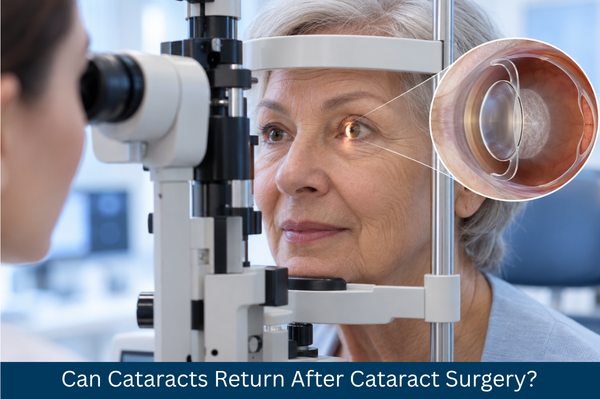
A cataract forms when the eye’s natural lens becomes cloudy. Cataract surgery removes that entire lens and replaces it with an artificial IOL. Since the natural lens is no longer there, a true cataract cannot regrow in that eye.
So why do some patients feel their symptoms have returned? The thin membrane left behind to support the new lens, known as the posterior capsule, can gradually become cloudy on its own. This creates blurred or hazy vision that feels familiar, so it is natural to assume the cataract is back.
It is a different condition, affecting different tissue, and it responds well to treatment. Recognising this distinction matters, because it means further cataract surgery is not required to correct it.
Why Does Vision Become Cloudy After Cataract Surgery?
To understand PCO, it helps to know what the posterior capsule actually does. It is a thin, clear membrane that holds the artificial lens securely in place after surgery, much like a small pocket keeping the implant correctly positioned in the eye.
In some patients, cells remaining on this membrane slowly multiply and thicken over time. As the membrane becomes less transparent, light entering the eye starts to scatter rather than focus clearly, and vision becomes hazy or dull in a way that can feel familiar to the original cataract.
A few points are worth remembering:
- PCO is not a new cataract
- It does not mean the original surgery was unsuccessful
- It is a recognised and common part of the cataract surgery journey, and it responds well to treatment
 Email Us Today!
What Are the Symptoms of Posterior Capsule Opacification?
PCO tends to develop gradually, so patients often notice it through small changes in everyday tasks rather than a sudden change in vision. Common symptoms include:
- Blurred or hazy vision
- Reduced contrast, making objects appear washed out or faces look less sharp than before
- Glare or halos around headlights or streetlights when driving at night
- Difficulty reading small print, such as text on a medicine label, a restaurant menu, or a book
- Needing brighter lights than usual to see clearly
- Colours appearing duller or less vivid than before
- A general sense that vision has become less sharp over recent months
If any of these symptoms sound familiar, it is worth arranging an eye examination. A specialist can confirm whether PCO is the cause and explain what treatment would help.
How Common Is PCO After Cataract Surgery?
Posterior capsule opacification is a recognised part of cataract surgery recovery rather than an unusual complication. It can appear anywhere from a few months to several years after the original procedure, and the timing varies from person to person.
Several factors can influence how likely PCO is to develop, including the type of lens implant used and individual healing patterns after surgery. Because it can appear so long after the original operation, regular eye examinations remain useful even for patients who have felt no change in their vision for years.
Other Reasons for Blurred Vision After Cataract Surgery
PCO is the most common explanation for cloudy vision appearing after cataract surgery, but it is not the only one. Blurred vision can also be linked to dry eyes, which is a frequent and often overlooked cause of fluctuating vision. A change in eye prescription over time can also affect clarity, as can conditions affecting the retina, such as changes involving the macula, or glaucoma.
Because several conditions can produce similar symptoms, a proper eye examination is the only reliable way to identify the cause. Assuming the cataract has returned, without an assessment, can delay treatment for whatever is actually happening.
How Can Patients Maintain Good Vision After Cataract Surgery?
Attending scheduled eye examinations, including ones long after surgery, is one of the most effective ways to catch changes early. Following any postoperative guidance from your surgeon, managing dry eye symptoms, and keeping existing eye conditions such as glaucoma well controlled all support long term vision. If vision changes suddenly or noticeably, reporting it to an eye specialist promptly allows the right diagnosis and treatment to happen sooner.
Testimonials
“I have seen Mr. Nanavaty Several Times, and he is always very professional and friendly”
When Should You Contact an Eye Specialist?
Most changes in vision after cataract surgery, including PCO, develop gradually and are not an emergency. However, certain symptoms need prompt attention. These include sudden loss of vision, new flashes of light or floaters, eye pain, severe redness, or vision that deteriorates quickly over a short period. These symptoms can point to conditions unrelated to PCO that require timely assessment.
Can PCO Be Prevented After Cataract Surgery?
PCO cannot always be prevented, since it depends partly on how an individual patient’s eye heals after surgery, and this varies from person to person for reasons that are not fully within anyone’s control. However, some factors can lower the likelihood of it developing. Modern lens designs and certain surgical techniques are associated with a reduced risk of PCO compared with older approaches, which is something your surgeon can discuss based on the lens used in your own surgery.
Because PCO cannot be entirely ruled out, regular follow up appointments remain the most reliable way to catch it early, whether or not any specific prevention steps were taken during the original surgery. Picking up the change early does not stop it from happening, but it does mean treatment can happen sooner and with less uncertainty. Knowing that PCO is a recognised, common, and manageable part of cataract surgery recovery, rather than a sign that something has gone wrong, can also help ease the worry that often comes with noticing cloudy vision again.
 Call Us Now!
How Sussex Eye Laser Clinic Supports Cataract Care
Understanding the reason behind changing vision is the first step toward choosing the right treatment. A clear diagnosis makes it far easier to decide what to do next, rather than guessing based on symptoms alone.
At Sussex Eye Laser Clinic, patients who notice changes in vision after cataract surgery are seen for a proper specialist assessment, rather than being left to guess whether the cataract has returned. This includes a detailed eye examination and access to diagnostic technology that helps identify the true cause of any change in vision. Ophthalmic surgeons at the clinic, including Prof. Mayank A. Nanavaty, are experienced in both cataract surgery and the longer term care that follows it, including the assessment of PCO, giving patients a clear understanding of their eye health so they can make informed decisions about treatment.
Conclusion
A cataract cannot grow back once it has been removed during cataract surgery, in the same eye or after time has passed. Cloudy vision appearing later is usually posterior capsule opacification, a separate, well understood, and treatable condition affecting the membrane behind the artificial lens. Regular eye examinations remain the best way to catch changes early and get the right diagnosis. Anyone experiencing new blurred or cloudy vision after cataract surgery should arrange an eye assessment to identify the cause and discuss suitable treatment options.