
Presbyopia is the natural loss of near focusing ability that usually becomes noticeable after 40. Presbyopia correction includes reading glasses, multifocal contact lenses, laser based blended vision and lens replacement surgery. Each approach has different benefits and trade offs. The right choice depends on your eye health, prescription, daily visual needs and a specialist assessment.
Presbyopia Correction After 40: What Adults Need to Know
Presbyopia correction becomes an important consideration for many people after 40, when reading small text, using screens or focusing on nearby objects becomes more difficult. This is a normal age related vision change, and many adults now want alternatives to reading glasses.
Some approaches use glasses or contact lenses, while others involve laser treatment or surgery inside the eye.
Prof. Mayank A. Nanavaty at Sussex Eye Laser Clinic provides specialist guidance to help patients understand suitable vision correction options based on their eye health, lifestyle requirements and visual goals.
Age Related Vision Changes: Why Presbyopia Develops After 40
Inside the eye, a clear lens sits behind the pupil. In younger people it is soft and flexible, and small muscles change its shape to shift focus from distance to near.
With age, the lens gradually becomes firmer and less elastic. It can no longer change shape as easily, so close objects appear blurred. This process continues slowly until the mid sixties.
Common signs include:
- Holding books, menus or phones further away
- Difficulty with small print, especially in dim light
- Eye strain or headaches after reading or screen use
- Slower refocusing between near and far objects
Presbyopia differs from myopia, hyperopia and astigmatism. Those conditions relate mainly to the shape of the eye or cornea and can appear at any age. Presbyopia comes from changes in the lens itself, so it can affect people who have never needed glasses. It can also occur alongside other refractive errors.
Presbyopia Treatment Options: An Overview
Presbyopia treatment options fall into four broad groups, each with a different balance of convenience, reversibility and risk.
- Reading glasses and varifocals: Simple, low risk and easily updated as your prescription changes.
- Contact lenses: Multifocal or monovision designs worn on the eye’s surface.
- Laser based correction: Reshapes the cornea to improve near focus in selected patients.
- Lens based procedures: Replace the natural lens with an artificial lens implant.
For people exploring presbyopia surgery options, the main approaches usually involve laser based corneal correction or lens replacement procedures.
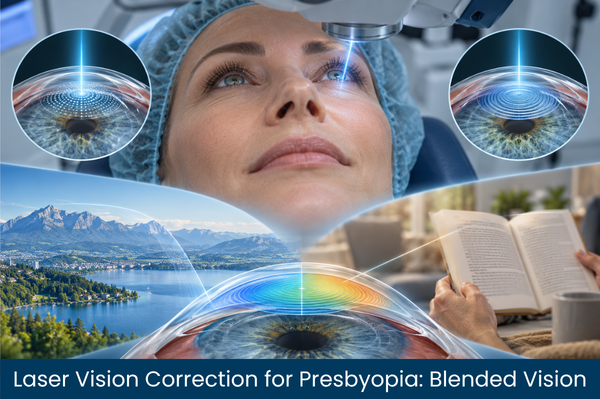
Laser Vision Correction for Presbyopia: Blended Vision Explained
Laser vision correction reshapes the cornea, the clear front surface of the eye. For presbyopia, the laser adjusts how the eyes focus so the brain gains usable vision at more than one distance.
Common strategies include:
- Monovision: One eye is set for distance and the other for near.
- Blended vision: A refined form of monovision with a smaller difference between the eyes, aiming for a smoother transition.
- Multifocal corneal treatment: The cornea is shaped with several focal zones.
Blended vision is usually considered by people with healthy corneas and no significant dry eye who want to reduce their dependence on reading glasses. Suitability also depends on corneal thickness and shape, the size of the prescription and retinal health.
Adaptation to different focus in each eye varies. Some people adjust within weeks, while others notice reduced depth perception, weaker night vision or eye fatigue. The natural lens keeps ageing after laser treatment, so reading glasses may still be needed for fine print or poor light.
A contact lens trial beforehand is valuable. Trial lenses mimic the planned focus difference, showing how you would cope with driving, screens and reading before any permanent change.
Lens Based Vision Correction and Refractive Lens Exchange
Lens based procedures work inside the eye. The natural lens is replaced with an intraocular lens, a technique called refractive lens exchange that follows the same principles as cataract surgery.
Because presbyopia is linked to changes in the natural lens, replacing it can address the lens related focusing changes. Implant designs include:
- Multifocal and trifocal lenses: Provide focus at distance, intermediate and near.
- Extended depth of focus lenses: Stretch the range of clear vision, often with fewer night time visual effects.
- Monofocal lenses: Give one focal point, sometimes combined with a monovision plan.
A replaced lens cannot develop a cataract, which is a long term consideration for some patients. However, this is intraocular surgery. Risks include infection, inflammation, retinal problems and the possible need for a further procedure. Multifocal designs can cause glare, halos or reduced contrast sensitivity, which often ease as the brain adapts but not always.
Lens surgery is usually considered when presbyopia comes with long sight, early lens clouding or a prescription unsuitable for laser. The retina, macula and general eye health are evaluated first.
Testimonials
“I have seen Mr. Nanavaty several times, and on every occasion, he has been professional, friendly and reassuring. He always takes the time to listen and makes me feel comfortable and well cared for throughout my appointments.”
Multifocal Contact Lenses: Alternatives to Reading Glasses
Contact lenses are the only non surgical route that can provide vision without glasses. They suit patients who want to try independence from reading glasses before committing to a permanent procedure.
Main designs include:
- Multifocal soft lenses: Zones for distance, intermediate and near within one lens.
- Monovision lenses: One eye corrected for distance, the other for reading.
- Modified monovision: A multifocal lens in one eye and a distance lens in the other.
- Rigid gas permeable multifocal lenses: Firm lenses that can give crisp vision but take longer to get used to.
Advantages include reversibility and the ability to adjust the prescription as your eyes change. They also let you experience a multifocal or monovision effect before considering surgery.
Considerations include handling, cleaning routines and ongoing supply costs. Dry eye can cause discomfort, and poor hygiene raises the risk of infection. Some people notice slightly less sharpness than with single vision lenses.
Presbyopia Surgery Options Compared: Laser, Lens and Contact Lenses
This table is a general guide, not a ranking.
Feature | Laser correction | Lens based correction | Contact lenses |
Where it works | Cornea | Inside the eye | Eye surface |
Nature | Surgical, generally permanent | Surgical, generally permanent | Non surgical, reversible |
Addresses natural lens ageing | No | Yes | No |
Main trade offs | Focus compromise, dry eye | Intraocular risks, glare and halos | Daily handling, infection risk |
Often considered for | Healthy corneas, moderate prescriptions | Long sight or early cataract | Trial period or avoiding surgery |
No single option works for every patient. An approach that suits one person may be inappropriate for another.
Factors That Influence Presbyopia Treatment Choice
Your specialist will weigh several elements together:
- Age: Younger presbyopes with clear lenses may be advised differently from those in their sixties.
- Existing prescription: Short sight, long sight and astigmatism change which options are practical.
- Eye health: Glaucoma, macular disease or retinal history affect surgical suitability.
- Corneal condition: Thickness, shape and dry eye influence whether laser is appropriate.
- Lifestyle and work needs: Night driving, sport, screen hours and print reading shape the ideal focus range.
- Personal expectations: Some people accept occasional glasses. Others want to minimise them.
Personalised Vision Correction Starts With a Detailed Assessment
General information cannot replace an individual eye evaluation. A thorough consultation typically includes:
- Detailed eye examination: Measurements of the cornea, lens, retina and tear film.
- Visual needs assessment: What you do each day, at which distances and in what lighting.
- Suitability review: Laser, lens and contact lens routes compared against your findings.
- Outcome discussion: Realistic results, possible side effects and whether glasses may still be needed.
Outcomes cannot be guaranteed.
Prof. Mayank A. Nanavaty at Sussex Eye Laser Clinic provides specialist consultation and personalised guidance for patients considering vision correction after 40.
 Drop Us an Email!
Presbyopia Correction at Sussex Eye Laser Clinic
Sussex Eye Laser Clinic is a specialist vision correction provider. Its approach begins with understanding the patient.
Patients can expect:
- Comprehensive eye assessments covering the front and back of the eye.
- Open discussion of options, including laser, lens and contact lens approaches.
- Personalised treatment recommendations based on findings and long term vision goals.
- Specialist ophthalmology expertise from Prof. Mayank A. Nanavaty.
- Patient focused decision making, with time for questions and the option of not proceeding with surgery.
Conclusion: Choosing Vision Correction After 40
Presbyopia is a common age related vision change after 40, caused by gradual stiffening of the eye’s natural lens. It is a normal part of ageing and not a disease.
Laser, lens and contact lens solutions each have their own benefits, limits and risks. The right approach depends on your eye health, prescription and lifestyle. A specialist assessment is the most reliable way to understand which options suit your reading vision improvement goals.