Colours may look brighter or cooler after cataract eye surgery because the artificial lens lets light through differently from the cloudy natural lens. The contrast can be more noticeable when only one eye has been treated. Mention stable colour changes at your next review, but seek urgent eye care if your vision suddenly worsens.
What Happens to Colours After Cataract Eye Surgery?
Many patients notice the change on the first morning after cataract eye surgery. A sheet of white paper looks crisp and slightly blue through the treated eye, yet warm and creamy through the other. The difference can be striking, and it often raises the question of whether something has gone wrong.
This kind of change is common, and in most cases colours after cataract eye surgery simply look different from what you had grown used to. This guide from Sussex Eye Laser Clinic explains why it happens, why one eye may look different from the other and what to mention at your follow up appointment.
Why Do Colours Look Brighter After Cataract Surgery?
The natural lens sits behind the pupil and focuses light onto the retina. As a cataract develops, the lens gradually becomes cloudy and often takes on a yellow or brown tint. That tint absorbs part of the blue end of the spectrum, so colours fade slowly enough that most people never realise how much has changed.
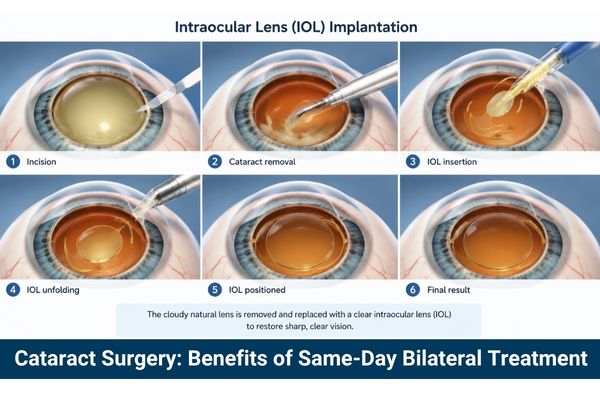
The cloudy natural lens is replaced with an artificial lens. This can change how much blue light reaches the retina, depending in part on the implant used. This is why many patients report brighter colours after cataract surgery, along with whites that look whiter and contrast that seems sharper.
It helps to separate two kinds of change. Brighter colours look more vivid and saturated, so a red jumper appears rich rather than dull, while a cooler appearance is a shift in tint, where a white kitchen cupboard looks faintly blue rather than cream. Patients may notice either change, both, or very little at all.
How noticeable this feels also depends on how dense the cataract was and on individual sensitivity to colour. Some lens implants include a light yellow filter, while others are fully clear. Your surgeon at Sussex Eye Laser Clinic can tell you which type you received if you want to understand your own colour perception after cataract surgery.
Why Is There a Colour Difference Between Eyes After Cataract Surgery?
When only one eye has been treated, the brain suddenly has two different references for the same scene. Colours may look cooler through the treated eye, particularly if the natural lens in the other eye still has a yellow or brown tint. Covering each eye in turn makes this colour difference between eyes after cataract surgery very easy to spot.
Before surgery, both eyes may have changed at a similar pace, so there was nothing obvious to compare against. Now the untreated eye can suddenly seem yellow or murky by comparison. This contrast alone does not mean the second eye has worsened; it reflects the new reference point that the treated eye has created.
Lighting can also affect how strong the difference seems, so the mismatch may be more noticeable in some settings than in others. This is one reason a comparison made at home in the evening can feel quite different from one made outdoors at midday.
Many people find that, with both eyes open, the brain blends the two images and the mismatch fades into the background. For others, it remains noticeable during tasks such as choosing paint colours or matching clothes. Whether and when to treat the second eye is a decision to discuss with Sussex Eye Laser Clinic rather than something to judge from colour alone.
What to Report About Colour Changes After Cataract Surgery
Your follow up appointment is an important part of recovery from cataract surgery, and a clear description of any colour change helps your clinician understand what you are experiencing. Making short notes in the days before the visit can help, so consider covering these points:
- Which eye: whether the change is in the treated eye, the untreated eye or both, and whether you still notice it with both eyes open.
- When it began: whether you saw it as soon as the eye shield came off or whether it appeared some days later.
- Stable or changing: whether the tint or brightness has stayed the same, eased or become stronger since your operation.
- Objects and lighting: the items and settings that make it obvious, such as printed pages, a computer screen or certain rooms and times of day.
- Everyday effects: any impact on reading, judging colours at work, recognising contrasts on steps or kerbs, or hobbies such as painting.
If a difference is persistent, pronounced or hard to put into words, your clinician can examine the eye and explain whether any further assessment would be useful in your case. Your notes give that examination a clearer and more focused starting point.
Please avoid trying to work out the cause yourself by repeatedly comparing your eyes at home. Room lighting, tiredness and screen settings all vary, so these checks can create worry without giving reliable answers. Bring your observations to Sussex Eye Laser Clinic and let a proper examination provide the explanation.
When Should You Seek Advice About Vision Changes After Cataract Eye Surgery?
A gradual colour difference that stays the same is something to raise at your planned review. A sudden or worsening change in vision is different and should never wait for a routine appointment. Increasing pain or redness also needs prompt attention, so contact your eye team straight away if either develops.
NHS guidance advises getting urgent help from NHS 111 if floaters suddenly appear or increase in number, you see flashes of light, a dark curtain or shadow moves across your vision, or your sight becomes suddenly blurred. These can be signs of a detached retina. Patients of Sussex Eye Laser Clinic can also let the clinic know, but should not delay urgent care while waiting for a reply.
How Does Sussex Eye Laser Clinic Support Cataract Surgery Patients?
Sussex Eye Laser Clinic is a specialist private eye clinic established in 2014, with locations in Brighton, Haywards Heath and Sutton. It provides routine and complex cataract surgery.
At your review, Prof. MAYANK A. NANAVATY can use your description of colour changes, differences between eyes and their effect on daily tasks to focus the examination. Clear, specific observations make it easier to explain what you are noticing and agree on any next steps together.
What Is the Key Takeaway on Colour Perception After Cataract Surgery?
If colours look different after cataract eye surgery, note which eye is affected and whether the change is stable. For routine questions, contact Sussex Eye Laser Clinic to discuss your observations with Prof. MAYANK A. NANAVATY. If your vision suddenly worsens, or you notice new flashes, floaters or a dark curtain across your sight, seek urgent eye care. Do not wait for a routine appointment or an online reply.