ICL vault is the central gap between an implantable contact lens and the eye’s natural lens. Surgeons measure it at review visits, often with an OCT scan, and treat a low or high reading as a prompt for specific checks rather than a diagnosis.
After implantable contact lenses are fitted, your surgeon checks the ICL vault at review visits. A high ICL vault or low ICL vault can guide what your surgeon checks next.
What Does Implantable Contact Lens Vault Measure?
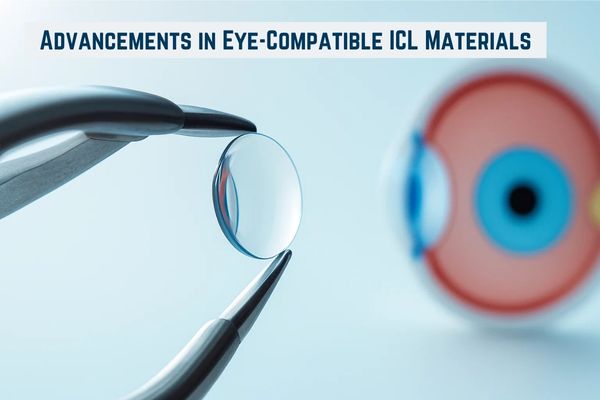
An implantable contact lens is a thin, flexible lens placed inside the eye, behind the coloured iris and just in front of your natural lens. Your own lens stays in place throughout. The implant is designed to arch gently over the natural lens without resting on it.
Implantable contact lens vault, often called central vault, is the distance from the back surface of the implant to the front surface of the natural lens at the centre of the eye. It describes the size of the gap at that single central point.
ICL lens positioning is a broader idea. Alongside the vault, surgeons look at whether the implant is centred, whether a toric lens has stayed aligned with its intended axis and how the lens edges sit behind the iris. Vault is one part of that picture rather than the whole of it.
How Surgeons Measure ICL Vault
After ICL surgery, review appointments usually combine a vision test, an eye pressure reading and a close examination of the front of the eye. Using a slit lamp microscope, your surgeon can look through the pupil and judge the space between the implant and the natural lens directly.
To put a number on that space, many clinics use anterior segment optical coherence tomography, often shortened to OCT. This quick scan uses light to build a detailed cross section image of the front of the eye, and nothing touches the eye while it is taken.
What Might a High ICL Vault or Low ICL Vault Mean?
Vault is one of the ways surgeons keep implantable contact lens risks in view, but neither finding below is a diagnosis. Each points the surgeon towards the part of the eye that deserves a closer look. Its meaning depends on the implant model, the measuring device and the rest of the examination, so a single reading rarely tells the whole story and no ideal number suits every patient.
What Does a Low ICL Vault Prompt Your Surgeon to Check?
A low ICL vault means the central gap between the implant and the natural lens is smaller than expected, so your surgeon may check for contact or early clouding of that lens. Many eyes with a smaller gap stay clear, and findings vary between implant designs.
What Does a High ICL Vault Prompt Your Surgeon to Check?
A high ICL vault means the central gap between the implant and the natural lens is larger than expected, so your surgeon may assess the drainage angle and check your eye pressure. A larger gap does not mean you have raised pressure or glaucoma, but it helps your surgeon decide which checks matter most.
Why Is ICL Lens Positioning Monitored Over Time?
Lighting can affect the measured vault, because bright light narrows the pupil and the gap can read smaller as a result. Readings are therefore easier to compare when they are taken under similar conditions and, ideally, with the same device.
Your surgeon can compare vault readings across visits to see whether the gap is steady or following a trend. Implant alignment is assessed separately, since a change in the vault reading does not by itself mean the implant has moved.
What Should You Confirm at Your ICL Surgery Review?
Bringing a few questions to your ICL surgery review keeps the conversation focused and helps you leave knowing what happens next. Patients at Sussex Eye Laser Clinic may find it helpful to note these points before the appointment and take them along:
- How does today’s vault reading compare with my earlier visits?
- Which other findings, such as vision, eye pressure and lens clarity, matter most for my eye?
- When do you recommend my next check?
- Who should I contact if my vision or comfort changes before then?
Depending on the overall findings, your surgeon may advise continued observation, further assessment or, less commonly, an intervention such as repositioning or exchanging the implant. Confirming the reason behind the suggested plan helps you understand the next steps for your own eye.
Implantable Contact Lens Surgery at Sussex Eye Laser Clinic
Sussex Eye Laser Clinic has provided specialist eye care since 2014. Its implantable contact lens surgery includes monofocal, toric and presbyopic (multifocal) options for suitable patients, alongside cataract surgery, laser refractive surgery and a range of other lens and cornea treatments.
The clinic is led by Prof. MAYANK A. NANAVATY, Consultant Ophthalmic Surgeon. A consultation or postoperative review gives you time to go through your vault measurement, lens position and monitoring plan, so each result is explained in the context of your own eye.
When Should You Contact Your Surgeon After ICL Surgery?
Note any mild, stable glare or halos to discuss at your next ICL review. If you develop worsening blur, increasing eye pain, redness or light sensitivity after surgery, contact your surgeon or an eye emergency service without delay. For a routine review of your vault measurement or monitoring plan, contact Sussex Eye Laser Clinic to arrange an appointment with Prof. MAYANK A. NANAVATY.