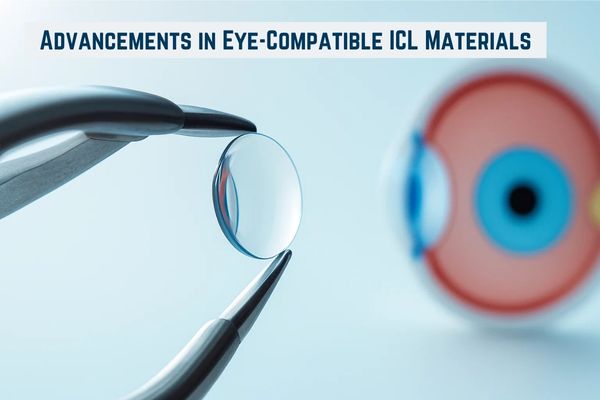
Changes in vision after implantable contact lens surgery can raise questions about future treatment. If you develop cataracts after ICL surgery, an examination helps identify what is affecting your sight. Your existing implant and overall eye health are considered when discussing the next steps. This guide explains assessment, ICL removal for cataract surgery and recovery.
Introduction to Cataracts After ICL Surgery
Developing cataracts after ICL surgery is possible because implantable contact lenses, usually shortened to ICL, leave the eye’s natural lens in place rather than replacing it. That natural lens can still become cloudy with age or for other reasons.
Understanding the relationship between an implantable contact lens and cataracts helps explain why both the existing implant and natural lens are reviewed when planning ICL and cataract surgery.
Sussex Eye Laser Clinic sees both existing ICL patients and people still considering the procedure, so understanding this relationship helps with decisions at either stage.
Why Cataracts After ICL Surgery Can Develop
Implantable contact lens surgery corrects short sightedness, long sightedness or astigmatism without removing the eye’s natural lens. The natural lens continues to sit behind the implant exactly as before.
A cataract is simply clouding of the natural lens, and it can develop with age or other contributing factors in the same way as in anyone who has never had eye surgery. Developing a cataract some years after ICL surgery does not confirm that the surgery caused it, since ophthalmology sources do not attribute every later cataract to the earlier procedure.
Cataract formation is one of the recognised ICL eye surgery complications that can occur in certain circumstances following implantation. Discussing implantable contact lens risks, including the possibility of a later cataract, forms part of a thorough preoperative consultation before any patient goes ahead with surgery.
Common contributing factors to cataract formation include advancing age, prolonged ultraviolet exposure, smoking and certain medical conditions such as diabetes. These influences apply to the general population regardless of any previous eye surgery. Cataracts are especially common later in life, though they can occasionally appear earlier for other reasons.
ICL describes one type of phakic intraocular lens rather than an exact name for every implantable lens design, so designs and risks vary between products. These factors are reviewed individually for each patient rather than assumed from implant type alone.
Vision Changes That May Signal Cataracts After ICL Surgery
A number of changes can suggest it is time for a review, including:
- Increasing blur or a general loss of clarity
- Glare or difficulty seeing well in low light or bright conditions
- A noticeable shift in glasses prescription
- New difficulty with reading, driving or other familiar tasks
None of these symptoms confirms a cataract on its own. Several other eye conditions can produce similar effects, which is why a proper examination matters rather than self diagnosis.
Sudden vision loss, severe eye pain or other urgent changes call for prompt attention rather than waiting for a routine appointment, since these symptoms are not typical of gradual cataract development after ICL eye surgery.
How ICL and Cataract Surgery Assessments Work Together
A typical examination reviews the natural lens and the extent of any clouding, together with the position and condition of the existing implant and overall eye pressure and eye health.
This usually includes a visual acuity test to measure how clearly each eye sees, a slit lamp examination to view the lens and implant closely, and dilating the pupil for a clearer view of the natural lens and the back of the eye.
Retinal health may also be reviewed, particularly for patients with a history of high myopia, since this group can carry additional considerations unrelated to the cataract itself.
Bringing details of the original ICL procedure, including the implant type if known, helps the clinician build a fuller picture. Not every patient needs identical tests, since findings guide what is examined next and shape any treatment plan that follows.
Does Cataract Surgery After ICL Always Need to Happen Immediately?
A confirmed cataract does not automatically mean immediate cataract surgery. The decision depends on how much the clouding affects everyday vision rather than on the diagnosis alone.
Examination findings, whether updated glasses or brighter lighting still help, and the presence of other eye conditions all feed into this decision, alongside the patient’s own priorities such as driving or close work.
Some manage well for a period with these measures, while others find that even mild clouding interferes enough with daily tasks to make earlier surgery the more practical choice.
ICL Removal for Cataract Surgery: What May Be Involved?
If cataract surgery is needed, the existing ICL is removed, and the cloudy natural lens is replaced with an intraocular lens, a different implant selected specifically for this stage of treatment.
The previous ICL corrected refractive error while the natural lens remained clear. The replacement intraocular lens provides focusing power after the cloudy natural lens has been removed.
Your surgeon will explain whether ICL removal and cataract surgery take place together in one procedure or as separate staged procedures, based on your individual examination findings.
Modern cataract surgery generally uses a technique called phacoemulsification. The cloudy natural lens is broken down and removed through a small incision before the new intraocular lens is put in its place.
Planning Vision After Cataract Surgery With an ICL History
Once cataract surgery becomes the plan, attention turns to selecting the right replacement lens power. This relies on careful eye measurements taken before the procedure.
Previous prescription details and records from the original ICL surgery, where available, support this planning. Astigmatism and other factors are also taken into account when choosing the intended visual outcome.
Priorities such as reading, screen work and distance vision are discussed at this stage, since lens options vary in how they handle near, intermediate and distance focus. The replacement lens is chosen with the patient’s daily needs and lifestyle in mind rather than a single default choice.
Glasses may still be needed afterwards for certain tasks. Cataract surgery aims for a good outcome, but it is planned around the patient’s own situation rather than promising identical vision to the ICL years.
Recovery From Cataract Surgery After ICL Removal
Recovery from cataract surgery instructions often resemble those given after other cataract procedures, though your surgeon tailors follow up and activity advice to your ICL removal, surgical findings and overall eye health.
This typically includes guidance on eye drops, daily activities and attending the follow up reviews recommended by the clinical team.
Most patients recovering from cataract eye surgery notice steady improvement over the following weeks, though full stabilisation can take a little longer for some.
Vision typically continues to settle during this period, so the final prescription is usually assessed once healing has progressed rather than immediately after the procedure.
Patients are usually advised to avoid rubbing the treated eye, swimming and strenuous activity for a period while it heals, with specific timeframes set by the surgeon based on individual progress.
Any unexpected or worsening symptoms during recovery should be reported promptly rather than waiting for the next scheduled appointment, since early review helps address concerns quickly.
Future Eye Care Questions for Prospective ICL Surgery Patients
Anyone considering ICL surgery can usefully raise a few questions in advance about how their eye health will be monitored over the years ahead.
Useful topics for a consultation include:
- How the natural lens and implant will be monitored over time
- Which records from the operation are worth keeping
- What changes in vision should prompt a future review
- How cataract treatment would be approached if it became necessary later
- Individual risk factors and realistic expectations for the procedure
Routine eye checks remain worthwhile even without new symptoms, since early changes are sometimes identified during a standard review rather than noticed by the patient first.
Keeping a simple note of any new symptoms, including when they started and how they affect daily tasks, makes it easier to describe changes accurately at a future consultation.
ICL and Cataract Assessment at Sussex Eye Laser Clinic
Sussex Eye Laser Clinic, based at Nuffield Health Brighton Hospital, provides lens and cornea based refractive treatments including implantable contact lenses and cataract surgery, alongside other eye care services.
For anyone with an existing ICL who later needs their natural lens, implant and overall vision reviewed, this combination of services is directly relevant. Prof. MAYANK A. NANAVATY leads consultations tailored to each patient’s findings.
Conclusion: Cataracts After ICL Surgery and Next Steps
Developing a cataract after ICL surgery does not automatically mean immediate treatment. An examination helps establish how much it affects your vision and whether monitoring or surgery is appropriate. If you notice changes in your sight, contact Sussex Eye Laser Clinic to discuss assessment and treatment planning with Prof. MAYANK A. NANAVATY.