Cataract surgery is one of the most common and successful forms of cataract treatment performed today, but it often leaves patients wondering about their future need for spectacles. This article answers that question in practical terms, covering reading, screens and distance vision. It also explains when a new prescription after cataract surgery might be arranged.
Introduction to Glasses After Cataract Eye Surgery
Will you still need glasses after cataract eye surgery? It is one of the most common questions patients ask before their operation.
The answer depends on the planned focus of your implanted lens and the tasks where clear vision matters most, whether that means reading glasses after cataract surgery for close work or distance glasses after cataract surgery for driving and other everyday activities.
This article explains what to expect for reading, computer use and distance vision, including when you may be able to get new glasses after cataract surgery. Prof. MAYANK A. NANAVATY at Sussex Eye Laser Clinic helps patients understand how their spectacle needs may change.
Why Might You Still Need Glasses After Cataract Eye Surgery?
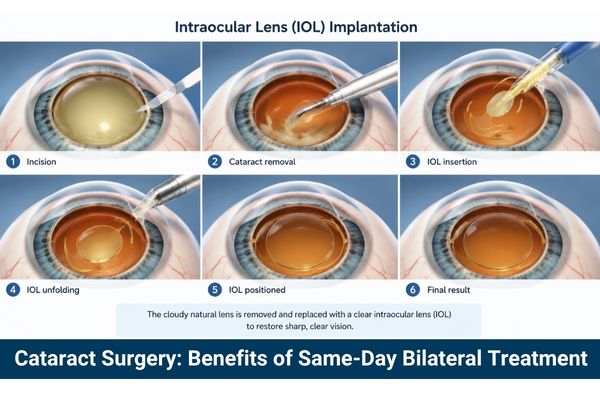
Cataract surgery removes the eye’s cloudy natural lens and replaces it with an artificial one. The new lens can be chosen with a particular focus in mind, often aimed at reducing how much patients rely on glasses for certain distances.
That does not mean spectacles disappear from the picture entirely. The surgery addresses the cataract itself, but it does not automatically correct every visual need for every task.
Conditions such as astigmatism, or other existing eye problems, can also influence the result. This is one reason the same operation can leave two patients with quite different glasses needs afterwards.
Reading Glasses After Cataract Surgery: What About Close Work?
Near vision covers a wide range of everyday tasks. Reading books, checking food labels, reading a restaurant menu, or reading medication instructions all depend on it.
Detailed hobbies such as sewing or craft work place similar demands on close vision. A patient who sees clearly across a room is not automatically free from needing reading glasses after cataract surgery for this kind of close work.
The strength and type of reading glasses that might suit you is not something to guess in advance. It is best confirmed at your prescription review, since near vision needs vary considerably between individuals.
Computer Use and Intermediate Vision
Intermediate vision sits between reading distance and distance vision, and it covers tasks many people do for hours each day. Working at a computer or laptop is the clearest example.
Other intermediate tasks include checking a car dashboard or working across a kitchen counter, where the object is neither in your hand nor far across the room.
Standard reading glasses or distance glasses are not always the most comfortable choice for this working distance. If screens are a large part of your day, make a note of your usual screen distance so it can be raised when your prescription after cataract surgery is being arranged.
Distance Glasses After Cataract Surgery: Driving and Outdoor Activities
Distance vision covers activities such as driving and reading road signs, watching television, recognising faces across a room, and spending time outdoors or travelling.
Some patients need little or no correction for these tasks after their operation, while others still benefit from distance glasses after cataract surgery.
If driving is important to you, follow the specific guidance given by your surgeon, and make sure your vision meets the legal driving standards before you get back behind the wheel.
What Affects Your Need for Glasses After Surgery?
Several factors shape why spectacle needs differ so much between patients. The planned focus of the implanted lens is one, since different lenses are selected with different distances in mind.
Any remaining prescription or astigmatism that is not fully addressed during surgery can also affect how sharp your vision feels at particular distances.
Whether surgery has been carried out on one eye or both plays a part too, as does your general eye health and the working distances you rely on most in daily life. At Sussex Eye Laser Clinic, your surgeon considers all of this together rather than looking at any single factor in isolation.
When Can You Get New Glasses After Cataract Surgery?
Vision can fluctuate in the early weeks after cataract eye surgery while the eye heals. Some fluctuation during this period is common, though you should still mention any changes to your eye care team.
Many patients can have their eyes checked for new glasses around four to six weeks after cataract surgery, once the operated eye has had time to settle. Your surgeon or optometrist at Sussex Eye Laser Clinic will advise you on the right timing for your own recovery.
If you are having surgery on both eyes, discuss whether to arrange an assessment after the first operation or wait until after the second. The best timing depends on your treatment schedule and visual needs.
How Is Your Prescription After Cataract Surgery Checked?
A prescription review looks at how you see for near, intermediate, and distance tasks, not just one of these in isolation. Your optometrist will also check for any remaining astigmatism or residual prescription.
You will likely be asked whether separate pairs of glasses for different tasks would suit you better than a single pair, based on how you actually use your eyes day to day.
Mentioning the specific tasks that matter to you, whether that is reading small print, screen work, or driving at night, helps your optometrist recommend glasses that genuinely match your routine rather than a generic solution.
What Can You Do While Waiting for Your Prescription Review?
Following the postoperative instructions given by your surgical team at Sussex Eye Laser Clinic is the first and most important step in your recovery from cataract surgery.
Your existing glasses may feel less helpful after surgery because your vision has changed. Ask your eye care team or optometrist what to use while you wait for your prescription review, especially if the difference between your eyes feels uncomfortable.
It can also help to keep a simple note of any tasks you find difficult, so you can raise them clearly at your appointment.
Avoid ordering permanent prescription glasses before you are advised that the timing is right, as your eyes may still be changing.
While some changes in vision can occur during recovery, seek urgent advice from your eye care team if you develop worsening vision, severe or increasing pain, increasing redness, or new flashes or floaters. Follow the emergency contact instructions provided after your operation.
Discussing Your Vision Needs With Sussex Eye Laser Clinic
Prof. MAYANK A. NANAVATY offers a detailed consultation before cataract surgery, giving you the chance to discuss your vision goals directly with him.
It is also worth asking how your vision will be reviewed after your operation at Sussex Eye Laser Clinic.
Finding a cataract surgeon Sussex patients trust starts with an honest conversation about your expected results. Patients considering cataract surgery in Sussex, including cataract surgery Brighton and the surrounding areas, are encouraged to raise these questions directly with their cataract surgeon.
Conclusion
Your need for glasses after cataract eye surgery depends on your individual vision and the activities you want to see clearly. Correction needs can differ between reading, screens and distance.
An eye examination can confirm your prescription once your eyes have settled. To discuss your expectations before surgery, contact Sussex Eye Laser Clinic and arrange a consultation with Prof. MAYANK A. NANAVATY.