
Laser refractive eye surgery is a popular and highly effective procedure designed to correct common vision issues like nearsightedness, farsightedness and astigmatism. For many individuals, it offers a chance to break free from the hassle of glasses or contact lenses. However, when it comes to pregnancy and breastfeeding, there are important factors to consider before opting for this kind of procedure.
The decision to undergo laser surgery should not only be based on your desire for clearer vision, but also on the timing. The hormonal changes associated with pregnancy and breastfeeding can significantly impact the accuracy and effectiveness of the surgery. It’s not about the technology or the laser itself – it’s about your changing biology. These hormonal shifts during pregnancy and breastfeeding can temporarily change your eye health, leading to unstable results. For the best and most lasting outcome, many eye surgeons advise postponing laser refractive eye surgery until after these biological changes have stabilized.
Laser Refractive Surgery: The Impact of Hormonal Changes During Pregnancy and Nursing
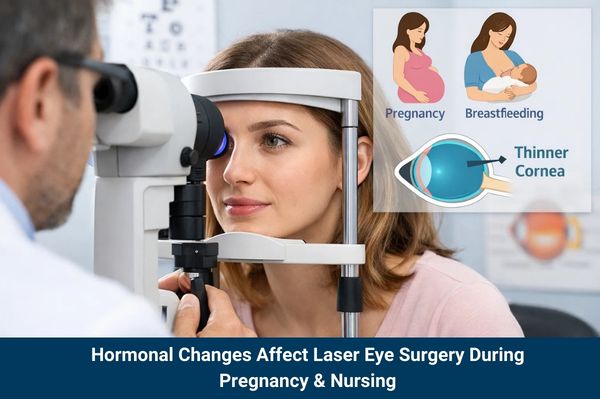
The laser refractive surgery process relies on precise measurements of your eye, particularly the cornea and prescription. Pregnancy and breastfeeding are periods when your body undergoes significant hormonal fluctuations, primarily involving the hormones progesterone and estrogen. These hormonal shifts can cause a range of physical changes and they extend to your eyes as well. For example, your cornea, which plays a crucial role in focusing light into your retina, can temporarily become thicker or thinner during pregnancy. Similarly, hormonal changes can lead to fluctuations in fluid retention and other changes in eye tissue.
Your cornea’s thickness is especially important in laser eye surgery. The laser works by reshaping the cornea to correct vision problems and this reshaping needs to be done accurately. If the cornea is thicker or thinner than normal due to hormonal changes, it can lead to inaccurate results. The laser’s precision depends on measurements taken during the procedure. If the cornea is not stable or if the prescription is inaccurate, the laser’s results may not be optimal.
Laser Refractive Eye Surgery: Changing Eye Prescription During Pregnancy and Breastfeeding
Pregnancy and breastfeeding do not just change the thickness of the cornea; they also affect your vision prescription. Hormonal fluctuations during pregnancy can lead to temporary changes in how your eyes focus. For example, some women experience blurry vision or fluctuating sight during pregnancy, often due to hormonal changes that cause changes in their prescription. This is particularly common for people who are already near-sighted or far-sighted.
During breastfeeding, these changes may continue, as breastfeeding hormones, including prolactin, can impact the structure of your eyes. This is why many women report experiencing fluctuations in their vision during these periods. Since laser refractive surgery involves precise reshaping of the cornea based on your prescription, any fluctuations in your eye’s prescription can affect the surgery’s outcome. If the prescription is not stable, it may lead to either an overcorrection or an undercorrection, making the procedure less effective.
Moreover, since pregnancy-related vision changes are temporary, attempting eye laser treatments when the eyes are in a state of flux may result in a need for additional adjustments or even repeat procedures later on. For this reason, most surgeons recommend waiting for at least 3 to 6 months after breastfeeding before undergoing laser refractive eye surgery. This waiting period allows your eyes to return to their natural, stable state, ensuring better long-term results from the procedure.
Why Surgeons Recommend Waiting: Laser Eye Surgery During Pregnancy and Nursing
Surgeons who specialize in refractive surgeries often advise against scheduling laser eye surgery during pregnancy or breastfeeding because of the potential for inaccurate measurements. If you are undergoing surgery during a time when your cornea’s thickness or your prescription is still fluctuating, it becomes difficult to guarantee the long-term success of the procedure.
To put it simply, pregnancy and breastfeeding can make your eye health a moving target and it’s extremely difficult for a surgeon to hit a moving target with precision. Laser eye surgery requires stability in the measurements and pregnancy-induced hormonal changes make that stability difficult to achieve. Think of it like trying to hit a bullseye with a moving target. The chances of success decrease when the target is constantly changing.
Additionally, laser refractive eye surgery also requires stable intraocular pressure (IOP). Pregnancy and breastfeeding can lead to fluctuations in IOP, which can cause vision changes or lead to increased risk for complications. Waiting until your hormones have returned to baseline ensures that your IOP and other factors related to your eye health are stable, giving you the best possible conditions for the procedure.
Testimonials
“Excellent manner, listens really well and gives multiple opportunities to ask questions, which is really helpful. Very calm, gently spoken and not rushed”
Laser Refractive Eye Surgery Cost: Why Timing Matters
The decision to undergo laser refractive surgery is a significant financial investment for many individuals. The laser refractive eye surgery cost can vary depending on factors like the surgeon’s expertise, the technology used and geographic location, but it typically ranges from $2,000 to $4,000 per eye. While cost is a key consideration, it’s important to think about the long-term benefits as well.
Choosing to undergo eye laser surgery during a period of hormonal instability may result in additional costs. If your prescription isn’t stable and the surgery needs to be repeated or adjusted, you could incur extra costs for follow-up treatments. By waiting until your body has stabilized, you increase the likelihood that the initial procedure will be sufficient, reducing the need for follow-up visits or additional procedures.
Some people may also wonder if the laser refractive eye surgery price changes after pregnancy. While the cost of the surgery itself doesn’t change, timing can influence the overall cost. Surgery performed during a stable period is more likely to be a one-time expense, while surgery during a time of hormonal change might result in additional expenses. Therefore, waiting for your body to stabilize may be more cost-effective in the long run.
 Call Now!
Specialist Insight for Laser Refractive Eye Surgery: Why Pregnancy Makes the Target Move Too Much
As previously mentioned, one of the key challenges when it comes to refractive surgeries during pregnancy or breastfeeding is the constant shifting of your eye health. This is something that specialists in laser surgery understand well. Surgeons often describe this situation as trying to hit a moving target. The hormonal fluctuations that occur during pregnancy and nursing can cause changes in your cornea, your prescription and even your intraocular pressure. These fluctuations make it much more difficult to achieve a stable and predictable result with eye laser treatments.
Specialists understand that precision is the key to a successful refractive eye surgery and the shifting target makes that precision harder to achieve. For instance, if your cornea is too thin or too thick due to hormonal fluctuations, it could affect how well the laser reshapes your eye. This is why most surgeons prefer to wait until you are no longer pregnant or breastfeeding and your hormones have returned to a more stable level.
Ultimately, waiting ensures that your eye measurements are as accurate as possible, reducing the need for future adjustments and ensuring the surgery’s effectiveness in the long term. A stable baseline is essential for the surgeon to perform the procedure as precisely as possible, which is why patience is key.
Conclusion:
In conclusion, while laser refractive eye surgery offers the opportunity for clearer vision, pregnancy and breastfeeding introduce complexities that should not be overlooked. Hormonal fluctuations during these periods can alter your cornea’s thickness and prescription, which can affect the accuracy of the surgery. For the best long-term results, most surgeons recommend waiting until your body has fully stabilized, typically 3 to 6 months after breastfeeding.
Waiting may seem like an inconvenience, especially if you’re eager to undergo laser surgery and improve your vision. However, taking the time to ensure your eyes have returned to their true baseline will increase the likelihood of a successful procedure and may save you from additional costs associated with follow-up treatments or corrections.
By understanding the effects of pregnancy and breastfeeding on your eyes and working with an experienced surgeon, you can ensure that when you finally undergo refractive surgery, your results will be lasting, cost-effective and precisely what you hoped for.
FAQs
1. Why should I wait to get Laser Refractive Eye Surgery during pregnancy or breastfeeding?
Hormonal changes during pregnancy and breastfeeding can alter corneal thickness and prescription, affecting surgery accuracy.
2. How long should I wait after pregnancy before considering Laser Eye Surgery?
It’s recommended to wait at least 3–6 months after breastfeeding to allow your eyes to stabilize and your prescription to return to normal.
3. Can pregnancy and breastfeeding permanently change my prescription for refractive surgery?
No, these changes are typically temporary. Waiting for your eyes to stabilize helps ensure a more successful surgery.
4. Does the cost of Laser Refractive Eye Surgery change after pregnancy?
The cost depends on the factors, but waiting until your eyes stabilize can prevent follow-up treatments and extra costs.
5. What is the best time for refractive surgery after breastfeeding?
The ideal time is 3–6 months after breastfeeding, allowing your eyes and prescription to return to their baseline.