
Corneal Transplant Surgery: The Safety Framework behind Success
Corneal Transplant Surgery is one of the most delicate and precision-driven procedures in modern ophthalmology. Because the cornea is the transparent front window of the eye, even the smallest complication can affect vision dramatically. That’s why safety measures are woven into every step of the process – from donor screening to long-term follow-up care.
Whether a patient undergoes a full-thickness PK Corneal Transplant or a partial-thickness DMEK Corneal Transplant, strict safety protocols are designed to minimize infection, prevent rejection and ensure long-term graft clarity. Surgeons, eye banks, nurses and even patients themselves all play crucial roles in protecting the success of the transplant.
Modern corneal transplant surgery is not just about replacing damaged tissue – it’s about safeguarding vision through precision, monitoring and proactive care. Let’s explore the key safety measures that make Corneal Transplants among the most successful organ transplant procedures worldwide.
Corneal Transplant Surgery: Safety First Through Donor Tissue Screening
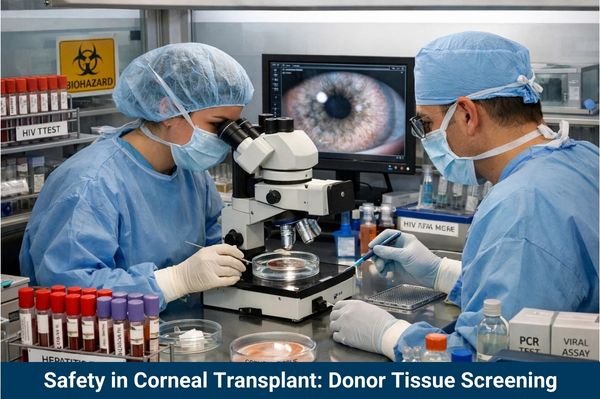
The safety of any corneal transplant begins long before the patient enters the operating room. It starts at the eye bank.
Every donor cornea undergoes extensive screening to ensure it is safe and viable. The “Safety First” protocol includes rigorous testing for infectious diseases such as HIV, Hepatitis B and C, syphilis and even emerging viral threats like COVID-19. Detailed medical and social histories of donors are reviewed to rule out potential risks.
A critical measure is the endothelial cell count. The cornea’s inner layer contains endothelial cells responsible for keeping it clear by pumping out excess fluid. Surgeons carefully evaluate the density of these cells before approving tissue for PK Corneal Transplant, DSAEK Corneal Transplant or DMEK Corneal Transplant procedures. A high endothelial cell count ensures the graft will remain transparent for years.
Microscopic inspection is another layer of safety. Specialists examine the cornea for scars, structural defects or signs of previous disease. Only tissue that meets strict criteria is released for transplantation.
This multi-step screening process significantly reduces the risk of disease transmission and graft failure, forming the foundation of safe corneal transplant surgery.
Corneal Transplant Surgery: Intra-Operative Sterility and Infection Prevention
Once inside the operating room, safety measures intensify. Corneal Transplants are performed in highly controlled, sterile surgical environments designed to minimize infection risks such as endophthalmitis, a rare but serious internal eye infection.
Every instrument is sterilized using advanced autoclave systems. Surgeons and staff follow strict aseptic techniques, including surgical scrubs, sterile gowns, gloves and drapes. Even airflow within the operating suite is filtered and controlled to reduce airborne contaminants.
Preoperative antibiotic eye drops are often administered to further reduce bacterial presence. During surgery, antiseptic solutions such as povidone-iodine are applied around the eye to eliminate surface microbes.
These layers of protection dramatically lower infection rates. In fact, due to such meticulous protocols, infection following corneal transplant surgery is rare. Sterility isn’t just a routine – it’s a carefully engineered system designed to protect the patient’s vision.
Corneal Transplant Surgery: Anesthesia Monitoring and Patient Stability
Anesthesia safety is another essential component of Corneal Transplant Surgery. Depending on the patient’s health, age and procedure type, surgeons may choose local anesthesia with sedation or general anesthesia.
In most cases, local anesthesia numbs the eye while the patient remains relaxed but awake. This approach reduces systemic risks and allows quicker recovery. However, for children or complex PK Corneal Transplant procedures, general anesthesia may be used.
Throughout the operation, advanced monitoring equipment tracks heart rate, blood pressure, oxygen saturation and breathing patterns. An anesthesiologist or trained anesthesia provider remains present at all times to respond instantly to any changes.
Keeping the eye perfectly still during microsurgery is crucial. Even slight movement could affect precision when placing sutures or transplant layers. Careful anesthesia management ensures both safety and surgical accuracy.
 Email Us
DMEK Corneal Transplant: Advanced Imaging for Precision Placement
The DMEK Corneal Transplant is a highly refined partial-thickness procedure that replaces only the innermost corneal layer. Because the transplanted tissue is extremely thin, precision is vital.
Intra-operative Optical Coherence Tomography (OCT) has revolutionized safety during these procedures. This advanced imaging system allows surgeons to visualize the cornea’s layers in real time during surgery.
With OCT guidance, surgeons can confirm correct tissue orientation and positioning before completing the procedure. This reduces the risk of graft detachment or improper alignment.
The use of imaging technology adds an extra safety net, especially in delicate surgeries like DMEK Corneal Transplant and DSAEK Corneal Transplant. Real-time feedback means fewer surprises and better outcomes.
DSAEK Corneal Transplant: The Air Bubble Safety Protocol
In DSAEK Corneal Transplant and DMEK Corneal Transplant procedures, surgeons use a medical-grade air or gas bubble to hold the transplanted tissue against the patient’s cornea.
This “air bubble” acts like a gentle internal bandage. It presses the graft into position until natural adhesion occurs. While effective, this step requires careful pressure management.
Surgeons monitor intraocular pressure closely during and after surgery. Excessive pressure can damage the optic nerve, while insufficient pressure may cause graft detachment.
Patients are given detailed positioning instructions – often requiring face-up positioning for several hours or days. This allows gravity and the air bubble to keep the graft securely attached.
The air bubble safety protocol demonstrates how small, precise techniques significantly enhance transplant stability and long-term success.
DALK Corneal Transplant: Layer-Specific Safety Advantages
The DALK Corneal Transplant replaces the front layers of the cornea while preserving the patient’s healthy inner endothelial layer. Because the endothelium remains intact, the risk of immune rejection is significantly reduced.
This procedure is often recommended for conditions like keratoconus or corneal scars that don’t affect the inner layer. By maintaining the patient’s own endothelium, DALK Corneal Transplant enhances safety and long-term graft survival.
Additionally, since the inner layer isn’t opened, the risk of certain complications – such as severe intraocular infection – is lower compared to full-thickness PK Corneal Transplant.
Layer-specific techniques like DALK reflect how modern corneal transplant surgery has evolved to maximize safety by tailoring procedures to individual needs.
PK Corneal Transplant: Suturing Precision and Structural Stability
The PK Corneal Transplant or penetrating keratoplasty, involves replacing the entire thickness of the cornea. Because it is a full-thickness transplant, structural integrity is paramount.
Surgeons use ultra-fine sutures – often thinner than a human hair – to secure the donor cornea. The number and placement of sutures are carefully calculated to maintain corneal shape and reduce astigmatism.
Suture tension is balanced meticulously to avoid distortion. After surgery, regular follow-up visits allow surgeons to adjust or selectively remove sutures to optimize vision and healing.
While PK Corneal Transplant has been performed for decades, continuous refinement in suturing techniques has made it safer and more predictable than ever before.
Testimonials
“Extremely gentle, professional and informative, Could not wish for more”
Corneal Transplant: Shielding the Eye from Mechanical Trauma
After a corneal transplant, the eye is vulnerable. Even accidental rubbing during sleep can disrupt healing.
Patients are instructed to wear a rigid plastic “Fox Shield” while sleeping for several weeks. This shield protects the eye from unintended pressure or impact.
During the day, protective eyewear – such as wraparound sunglasses or impact-resistant glasses – helps shield the eye from dust, wind and accidental bumps.
These mechanical safety measures may seem simple, but they play a powerful role in protecting delicate sutures and ensuring graft stability during the early healing phase.
Corneal Transplant Surgery: Pharmacological Safety and Steroid Balance
Medication management is one of the most critical safety aspects of Corneal Transplant Surgery.
Corticosteroid eye drops are prescribed to prevent immune rejection. These drops suppress the body’s natural defense mechanisms that might otherwise attack the transplanted tissue.
Patients must follow a strict schedule, often for months or even years. However, long-term steroid use carries potential side effects, including increased eye pressure and steroid-induced glaucoma.
To manage this risk, regular eye pressure checks using a tonometer are mandatory. If pressure rises, medications can be adjusted promptly.
Balancing rejection prevention with pressure control requires careful monitoring, making pharmacological safety a continuous process rather than a one-time intervention.
 Call Us Now!
Corneal Transplants: The Red Flag System for Early Rejection Detection
Even with perfect surgery, the immune system can sometimes react. That’s why patients are educated about the “RSVP” warning signs:
- Redness
- Sensitivity to light
- Vision changes
- Pain
Recognizing these symptoms early can save the transplant. Rejection episodes, when treated promptly with intensified steroid therapy, are often reversible.
Patients are provided with 24/7 emergency contact information for their surgical team. Rapid access to care ensures that any complication is addressed within hours, not days.
This collaborative approach – where the patient becomes an active participant in monitoring – adds another vital layer of safety.
Corneal Transplant Surgery: Long-Term Follow-Up and Vision Preservation
Safety does not end after recovery. Corneal transplant surgery requires ongoing follow-up visits to monitor graft clarity, eye pressure and overall eye health.
Even years after surgery, regular check-ups help detect subtle changes before they become serious problems. Early intervention remains the key to preserving vision.
With advancements in surgical techniques like DMEK Corneal Transplant, DSAEK Corneal Transplant, DALK Corneal Transplant and PK Corneal Transplant, safety standards continue to improve.
Corneal Transplants boast one of the highest success rates among all transplant procedures, largely due to these comprehensive safety measures. From donor screening and sterile surgical environments to medication management and patient education, every step is designed with one goal in mind: protecting sight.
When performed under strict safety protocols and followed by diligent care, a corneal transplant offers not just restored vision – but renewed clarity, confidence and quality of life.
Conclusion:
Corneal Transplant Surgery is not simply a procedure – it is a carefully coordinated journey built on multiple layers of safety. From the moment donor tissue is screened at the eye bank to years after the transplant has healed, every stage is governed by strict protocols designed to protect vision. The rigorous infectious disease testing, endothelial cell evaluation and microscopic tissue inspection ensure that only healthy, high-quality donor corneas are selected. Inside the operating room, sterile environments, advanced imaging technology and precise anesthesia monitoring further reduce risks and enhance surgical accuracy.
Whether it is a full-thickness PK Corneal Transplant or advanced partial procedures like DMEK Corneal Transplant, DSAEK Corneal Transplant or DALK Corneal Transplant, each technique incorporates specific safety strategies tailored to the patient’s condition. Postoperative protection – through eye shields, steroid management, pressure monitoring and early detection of rejection signs – adds yet another safeguard to preserve graft clarity and long-term success.