
AI Summary
This article aims to explore YAG laser capsulotomy, specifically focusing on the risk of posterior capsule opacification (PCO) after cataract surgery. By delving into statistical data, we will discuss how often PCO occurs, the factors influencing its development and the role of YAG laser treatment in addressing this condition. This comprehensive guide will provide insights for patients considering YAG laser capsulotomy as a treatment option and help them understand the risks and effectiveness of the procedure.

What is YAG Laser Capsulotomy?
YAG laser capsulotomy is a common procedure used to treat posterior capsule opacification (PCO), a condition that can occur after cataract surgery. During cataract surgery, the cloudy lens of the eye is removed and replaced with an intraocular lens (IOL). The posterior capsule, which holds the IOL in place, may become cloudy over time, leading to blurred vision. This cloudiness is what is referred to as posterior capsule opacification, a common complication of cataract surgery.
YAG laser eye treatment involves using a laser to create a small opening in the cloudy posterior capsule, which restores clarity to the patient’s vision. This procedure is minimally invasive and can be performed in an ophthalmologist’s office, with no need for stitches or sutures. The YAG laser capsulotomy treatment is quick and often results in an immediate improvement in vision.
Read Our Article: Signs You May Need YAG Laser Treatment: Diagnosing the Right Candidates
Testimonials
“Excellent manner, listens really well and gives multiple opportunities to ask questions, which is really helpful. Very calm, gently spoken and not rushed”
How Often Does Posterior Capsule Opacification Happen?
PCO is one of the most common complications following cataract surgery and it can develop months or even years after the procedure. While the exact frequency of PCO can vary depending on several factors, statistics indicate that between 20% and 40% of cataract surgery patients may develop posterior capsule opacification within five years after their surgery.
Several factors influence the likelihood of developing PCO:
- Age of the patient: Younger patients are more likely to develop PCO than older patients, as their eyes tend to heal more aggressively after cataract surgery.
- Type of intraocular lens (IOL): Some types of IOLs, particularly those with a more square edge, are associated with a lower risk of PCO, while other IOL designs may increase the risk.
- Surgical technique: The skill and experience of the surgeon performing the cataract surgery can also influence the risk of developing PCO.
- Pre-existing eye conditions: Individuals with other eye conditions, such as glaucoma or diabetic retinopathy, may have a higher risk of developing PCO.
It is important to note that while posterior capsule opacification is common, it is treatable and does not typically result in permanent vision loss. The YAG laser capsulotomy procedure can provide a quick and effective solution for those affected.
Our Other Treatments: Laser Refractive Eye Surgery
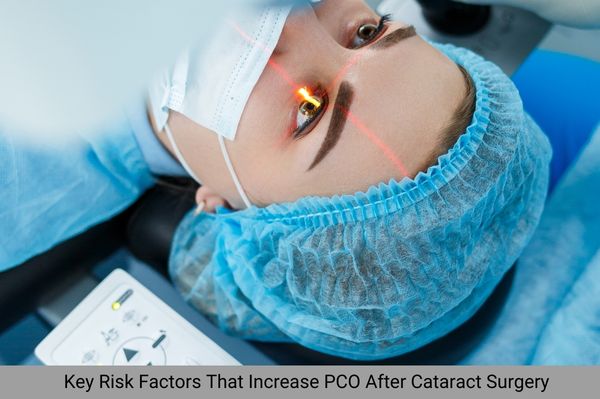
Risk Factors for Posterior Capsule Opacification
While PCO can develop in any patient after cataract surgery, certain factors may increase the risk. These include:
Age of the Patient
Younger patients who undergo cataract surgery tend to develop PCO more frequently than older patients. This is believed to be due to the more active healing process in younger individuals, which may lead to increased cellular growth and cloudiness of the posterior capsule. However, while the incidence of PCO is higher in younger patients, the condition is treatable with YAG laser treatment.
Type of IOL
Certain types of intraocular lenses (IOLs) may have a lower risk of causing PCO. Specifically, IOLs with sharp edges are associated with a reduced risk of cell migration and posterior capsule clouding. On the other hand, IOLs with rounder edges may increase the chances of PCO development. The design of the lens plays a crucial role in how well it prevents the growth of cells that can lead to posterior capsule opacification.
Read Our Article: YAG Laser Capsulotomy: How It Has Evolved Over the Years
Surgical Technique
The technique used by the surgeon during cataract surgery can influence the likelihood of developing PCO. Proper handling of the posterior capsule during the procedure is essential to minimizing the risk. Surgeons who are experienced with advanced cataract surgeries, such as femtosecond laser-assisted cataract surgery, may be able to reduce the risk of PCO.
Pre-existing Eye Conditions
Certain underlying eye conditions, including glaucoma, diabetic retinopathy or uveitis, may increase the risk of PCO. In these patients, inflammation or other complications can promote cell growth within the capsule, leading to cloudiness.
Incomplete Removal of Cataract Tissue
If cataract tissue is not completely removed during surgery, it can leave behind cells that may lead to posterior capsule opacification. Proper cleaning of the lens capsule is essential in preventing PCO.

YAG Laser Capsulotomy Treatment: What to Expect
For those who develop posterior capsule opacification, YAG laser treatment is a safe and effective option. The procedure is relatively quick and typically takes only a few minutes to perform. Here’s a step-by-step overview of what patients can expect:
- Initial Consultation: The first step is a thorough eye exam by an ophthalmologist to assess the severity of the PCO. The ophthalmologist will use a special instrument to examine the posterior capsule and determine if a YAG laser capsulotomy is necessary.
- The Procedure: During the procedure, the ophthalmologist will use a YAG laser to make a small, precise hole in the cloudy posterior capsule. This hole allows light to pass through and restores vision clarity. The procedure is usually performed without anesthesia, though numbing eye drops may be used to ensure comfort.
- Recovery: Most patients experience minimal discomfort during or after the procedure. Some may experience mild irritation or floaters in their vision for a few days, but this typically resolves quickly. Vision usually improves immediately or within a few hours of the procedure.
- Follow-up: After the YAG laser capsulotomy, follow-up visits are important to monitor healing and ensure that no further complications, such as increased intraocular pressure, occur. Most patients achieve significant improvement in vision and the effects of the treatment are usually long-lasting.
Our Other Treatments: Refractive Lens Exchange Surgery
YAG Laser Surgery vs. Other Treatment Options for PCO
While YAG laser surgery is the most common and effective treatment for posterior capsule opacification, there are other approaches that may be considered in rare cases:
- Manual capsulotomy: In some cases, the ophthalmologist may perform a manual procedure to remove the opacified capsule. However, this method is more invasive and carries a higher risk of complications compared to YAG laser surgery.
- Repeat cataract surgery: In extreme cases where the opacification cannot be treated with a laser, patients may require repeat cataract surgery to remove the opacified posterior capsule. However, this is a rare and more invasive approach.
For the vast majority of patients, YAG laser eye treatment is the most effective and least invasive option for restoring clear vision after cataract surgery.
Conclusion
YAG laser capsulotomy is a highly effective treatment for posterior capsule opacification (PCO), a common condition that can occur following cataract surgery. While PCO affects a significant number of cataract patients, the good news is that it is treatable with minimal risk and discomfort using the YAG laser treatment. Understanding the risk factors and statistics associated with PCO can help patients make informed decisions about their treatment options.
By addressing common concerns such as cost, risks and treatment outcomes, individuals can better navigate their options and enjoy clearer vision without the need for invasive procedures. Consulting with a qualified ophthalmologist and exploring options like YAG laser capsulotomy near me ensures that patients receive the best care for their specific needs, leading to improved vision and quality of life.