
Refractive Lens Exchange: Questions to Ask Before Surgery
To assist prospective patients in making informed decisions by outlining the essential questions to ask an ophthalmologist regarding Refractive Lens Exchange (RLE), covering candidacy, procedural details, lens options, recovery, risks and financial considerations, while organically integrating specific keywords for search engine optimization.
Top Questions to Ask Your Doctor before Undergoing Refractive Lens Exchange Surgery
The decision to undergo vision correction is a significant step toward improving your quality of life. For individuals over a certain age or those with prescriptions outside the range of laser vision correction, Refractive Lens Exchange (RLE) often emerges as a premier solution. This procedure, frequently referred to as refractive lens replacement or clear lens exchange, involves removing the eye’s natural lens and replacing it with an artificial intraocular lens (IOL) to correct refractive errors.
While the concept sounds similar to cataract surgery, the intent differs, as RLE is primarily elective and aimed at reducing dependence on glasses or contact lenses rather than removing a cloudy lens. Before scheduling your procedure, it is vital to have a detailed consultation with your ophthalmologist. Asking the right questions ensures you manage your expectations and understand the investment you are making in your vision. The following guide explores the critical topics you should discuss with your surgeon.
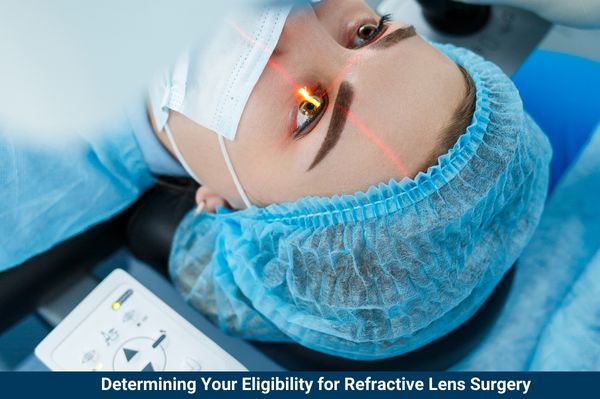
Am I a Suitable Candidate for Refractive Lens Surgery?
One of the first questions to ask involves your specific eligibility. Not everyone is an ideal candidate for refractive lens surgery. Typically, this procedure is recommended for individuals who have the beginnings of presbyopia – the age-related loss of near vision – or those with high degrees of farsightedness (hyperopia) or nearsightedness (myopia) that make them unsuitable for LASIK or PRK.
Your doctor will perform a comprehensive eye exam to measure the health of your eyes. It is important to ask if your corneal thickness, pupil size and the overall health of your retina support the procedure. Unlike laser vision correction, which reshapes the cornea, lens replacement for eyes bypasses corneal constraints by addressing the focusing mechanism directly. If you have early signs of cataracts, your surgeon might suggest this procedure as a preemptive measure, as it eliminates the possibility of developing cataracts in the future. Understanding why you are – or are not – a good candidate is the foundation of a successful outcome.
What Types of Replacement Eye Lenses Are Available?
The success of refractive lens replacement surgery relies heavily on the type of intraocular lens implanted. Unlike the natural lens, which flexes to focus at different distances, artificial lenses come in various designs, each with unique benefits and compromises.
Ask your surgeon to explain the differences between monofocal, multifocal, extended depth of focus (EDOF) and toric lenses. Monofocal lenses usually provide clear vision at a single distance, often requiring the patient to wear reading glasses for near tasks. In contrast, multifocal replacement eye lenses are designed to split light, allowing for clear vision at multiple distances – near, intermediate and far.
For patients with astigmatism, toric lenses are essential as they correct the irregular curvature of the cornea. Your doctor should explain which lens best suits your lifestyle. For instance, if you drive frequently at night, you should ask about potential visual side effects like halos or glare, which can be more common with certain multifocal lenses. Choosing the right replacement eye lens is a permanent decision, so take the time to explore how each option aligns with your daily activities, hobbies and visual demands.
Our Other Treatments: YAG Laser Capsulotomy

How Does the Procedure Differ from Cataract Surgery?
Patients often confuse RLE with standard cataract procedures. It is helpful to ask your doctor to clarify the distinction between refractive lens exchange vs cataract surgery. Anatomically and technically, the surgeries are virtually identical. In both cases, the surgeon accesses the lens capsule, uses ultrasound or laser energy to break up and remove the natural lens and inserts a new artificial lens.
The primary difference lies in the diagnostic label and the health of the lens being removed. In cataract surgery, the lens is cloudy and obstructing vision. In refractive lens exchange, the lens is clear, but its focusing power is ineffective. Understanding this distinction is often important when discussing insurance and refractive lens exchange cost, as medical necessity plays a huge role in coverage. By asking this, you ensure you understand that you are opting for a performance-enhancing procedure rather than a medically necessary pathology treatment.
Read Our Article: Refractive Lens Surgery: What Is It?
Testimonials
“Excellent manner, listens really well and gives multiple opportunities to ask questions, which is really helpful. Very calm, gently spoken and not rushed”
What Is the Recovery Timeline for Eye Surgery Lens Replacement?
Recovery is a major concern for any surgical patient. You should ask your surgeon what to expect in the hours, days and weeks following eye surgery lens replacement. While the procedure itself is typically performed on an outpatient basis and takes a short amount of time, the healing process varies from person to person.
Inquire about downtime. When can you return to work? How long should you wait before driving or exercising? Most patients experience an immediate improvement in vision, but it can take time for the brain to adapt to the new visual system, especially with multifocal lenses. This period of neuro-adaptation is a crucial concept to understand.
Furthermore, ask about restrictions regarding water exposure, such as swimming or showering and the schedule for using antibiotic and anti-inflammatory eye drops. Knowing the recovery roadmap for lens replacement helps you plan your schedule and reduces anxiety regarding post-operative symptoms like temporary blurred vision or light sensitivity.
What Are the Potential Risks and Complications?
No surgical intervention is without risk. While Lens replacement surgery is considered highly safe and effective, it is an invasive procedure that involves entering the eye. You must have a frank discussion with your doctor about potential complications.
Ask specifically about the risks of retinal detachment, infection and posterior capsular opacification (PCO). PCO is a common occurrence where the membrane holding the new lens becomes cloudy weeks or months after surgery, often requiring a simple laser procedure to correct.
For patients who are extremely nearsighted, the risk of retinal issues may be slightly higher and your doctor should explain the preventative measures they take. Additionally, ask about the risk of lens dislocation or visual disturbances that do not resolve. A trustworthy surgeon will be transparent about these possibilities and explain their protocol for managing complications should they arise during your refractive lens surgery.
What is the Total Cost of Refractive Lens Exchange?
Financial planning is a practical and necessary part of the process. Because RLE is an elective procedure, it is rarely covered by health insurance. Therefore, understanding the full refractive lens exchange cost is vital. When you ask for a quote, ensure that it is all-inclusive.
Does the cost of refractive lens exchange cover the surgeon’s fee, the facility fee, the cost of the advanced lens implant and all pre-operative and post-operative appointments? Sometimes, the price is quoted per eye, while other times it may be a package.
You should also inquire about financing options. Many practices offer payment plans to make the lens replacement cost more manageable. Do not hesitate to ask if there are different price points based on the type of lens chosen. For example, toric or multifocal lenses often carry a higher price tag than standard monofocal lenses due to the advanced technology involved. Clarifying the eye lens replacement price upfront prevents surprise bills later and allows you to budget effectively for your vision upgrade.
Our Other Treatments: Cataract Surgery
Is the Procedure Permanent or Reversible?
It is important to understand the longevity of the results. Ask your doctor if the replacement eye lenses are permanent. In the vast majority of cases, the intraocular lens is intended to remain in the eye for the rest of the patient’s life. The material used for these lenses is biocompatible and does not degrade over time.
However, you should also ask if the procedure is reversible or adjustable. While the natural lens cannot be put back once removed, an artificial lens can technically be explanted and exchanged if there is a complication or if the lens power is incorrect. This is rare and complex, so surgeons strive to get it right the first time. Asking about this helps you understand the gravity of the decision and the importance of accurate pre-operative measurements.
Furthermore, since the natural lens is removed, you will never develop cataracts in the future. This is a significant long-term benefit of lens replacement for eyes that adds value to the procedure, effectively checking a major age-related health concern off your list permanently.
How Many Procedures Has the Surgeon Performed?
The skill of the surgeon is paramount. Do not be afraid to ask about your doctor’s specific experience with refractive lens replacement surgery. While many ophthalmologists perform cataract surgery, RLE requires a specific mindset focused on refractive outcomes – aiming for perfect vision without glasses rather than just removing pathology.
Ask how many RLE procedures they perform annually and what their success rates are. You might also ask if they use the latest technology, such as femtosecond lasers, to assist with the surgery. This technology can offer a higher degree of precision during the incision and lens fragmentation steps. A surgeon who specializes in refractive lens exchange will be comfortable discussing their track record and may even share patient testimonials or data regarding visual outcomes.

What Happens if I Still Need Glasses After Surgery?
While the goal of lens replacement is often to eliminate the need for corrective eyewear, perfection cannot be guaranteed. It is prudent to ask what happens if your vision is not perfect after the eye heals.
In some cases, a residual refractive error – a small amount of astigmatism or nearsightedness – may remain. Ask your doctor if they offer enhancement procedures.
Conclusion
Undergoing Refractive Lens Exchange is a life-changing event that offers the promise of clear, youthful vision. However, it is a sophisticated medical procedure that requires careful consideration and planning. By asking your doctor these detailed questions – ranging from the nuances of refractive lens exchange surgery to the specifics of the costs – you empower yourself to make a confident and informed decision. A thorough consultation with Dr. Mayank Nanavaty, an ophthalmic surgeon, where all your questions are answered transparently is the first step toward a future of visual freedom. Take the time to understand the process, the replacement eye lens options and the recovery journey to ensure the best possible investment in your sight.