
AI Summary
This article provides a detailed and structured guide to the post-operative management of patients who undergo artificial corneal transplant surgery. It aims to outline what patients and caregivers can expect during recovery and how to protect and maintain vision long-term following synthetic corneal implantation.
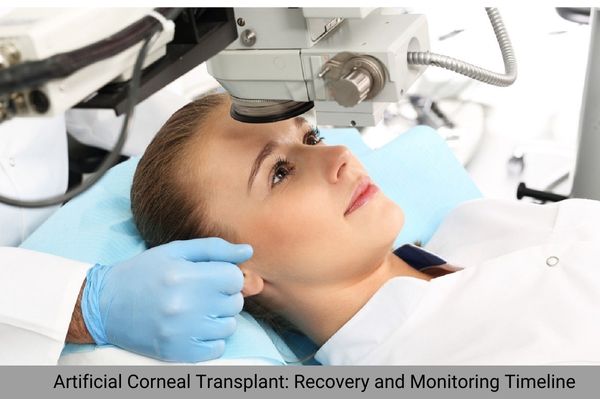
Artificial Corneal Transplant Recovery Timeline and Monitoring Needs
Patients undergoing an artificial corneal transplant face a recovery process that differs significantly from traditional donor-based corneal transplant procedures. Synthetic devices, while avoiding immune rejection, introduce a specific set of postoperative demands. These include continuous monitoring for inflammation, infection and device-related complications.
Initial post-op care typically involves:
- Frequent follow-up visits in the first few weeks
- Monitoring intraocular pressure
- Assessing for signs of retroprosthetic membrane formation
- Evaluating epithelial integrity around the prosthesis
Within the first three months, healing may stabilize, but risks remain high for secondary complications. The long-term nature of care requires structured ophthalmologic surveillance, often for years after implantation. Patients must understand that synthetic corneal transplant surgery is not a one-time event – it is a lifelong management commitment.
Artificial Corneal Transplant Medication Management After Surgery
Post-surgical pharmacologic therapy plays a central role in controlling inflammation, preventing infection and preserving implant function. Patients are typically prescribed:
- Topical corticosteroids to reduce inflammation
- Antibiotics (often fluoroquinolone-based) for infection prophylaxis
- Intraocular pressure-lowering agents, when needed
Compliance with the medication regimen is critical. Skipping doses or incorrect application may lead to complications, including corneal melt or glaucoma. In some cases, long-term use of topical medications may be necessary, especially in eyes that remain inflamed or at high risk for secondary problems.
The intensity of treatment may reduce over time but is never completely eliminated. Regular reviews of the therapeutic plan help balance the benefits of control against the potential side effects of prolonged medication exposure.
Synthetic Corneal Transplant Vision Monitoring and Rehabilitation
Following synthetic corneal transplant surgery, vision may improve gradually depending on the condition of the retina, optic nerve and overall ocular health. However, visual rehabilitation isn’t always straightforward. Some patients may experience:
- Fluctuating vision in the early weeks
- Halos, glare or photophobia
- Reduced contrast sensitivity
Routine vision testing, including visual acuity, contrast sensitivity and visual field assessments, allows the care team to track changes and identify emerging issues.
In some cases, optical rehabilitation with customized lenses may be needed. Rigid gas-permeable lenses or scleral lenses can help fine-tune visual function, especially if residual refractive error or surface irregularity exists. Early referral to a low-vision specialist may be beneficial when structural damage limits recovery potential.
Artificial Corneal Transplant Treatment Adjustments Over Time
As healing progresses, the post-op regimen may need adjustment. This may include:
- Switching antibiotics based on tolerance or microbial resistance patterns
- Adding lubricants to support surface healing
Surgical revisions may also become necessary. Some patients require secondary procedures to manage RPMs, lens repositioning or drainage device implantation for glaucoma. These adjustments are often planned proactively based on observed trends during follow-up.
Because the artificial implant alters ocular physiology, standard management algorithms may not always apply. Each patient must be approached with individualized planning, based on evolving clinical findings.
Our Other Treatments: Cataract Surgery
Testimonials
“Excellent manner, listens really well and gives multiple opportunities to ask questions, which is really helpful. Very calm, gently spoken and not rushed”
Synthetic Corneal Transplant and Glaucoma Risk Post-Surgery
One of the more prevalent long-term concerns after synthetic corneal transplant is secondary glaucoma. Elevated intraocular pressure can result from chronic inflammation, anatomical crowding or blockage of trabecular meshwork by cellular debris or membranes.
Management includes:
- Laser procedures in some cases
- Surgical shunt placement in refractory cases
Standard pressure measurement tools may not yield reliable readings in eyes with artificial implants. Alternative devices, like dynamic contour tonometry, may provide better insight into true intraocular pressure.
Long-term success requires not just maintaining implant position and clarity, but also protecting the optic nerve from glaucomatous damage.

Artificial Corneal Transplant Hygiene and Lifestyle Instructions
Patients must follow strict hygiene practices to protect the eye from infection and mechanical trauma. Recommendations include:
- Avoiding swimming or contact with contaminated water
- Using sterile eye shields during sleep to prevent inadvertent rubbing
- Washing hands thoroughly before applying medications
- Avoiding dusty or high-exposure environments when possible
Contact lens use should be closely monitored and any auxiliary devices must be prescribed and maintained by a qualified specialist.
Certain activities, such as high-impact sports or occupations involving particulate exposure, may be contraindicated. Each case should be evaluated individually to determine safe levels of activity.
Read Our Article: Synthetic Corneal Transplants: Causes, Diagnosis and Recovery
Synthetic Corneal Transplant Surgery and Posterior Segment Monitoring
Visual access to the retina and optic nerve may be limited following synthetic corneal transplant surgery, depending on the implant’s optical design. This can delay diagnosis of posterior pathologies such as:
- Retinal detachment
- Macular edema
- Choroidal neovascularization
Advanced imaging techniques, including ultrasonography and adaptive optics, may be necessary for complete posterior evaluation.
In high-risk patients, planned posterior segment surveillance protocols may include periodic imaging or referrals to retina specialists. Some implant designs allow limited visualization, but even under ideal conditions, assessments may be compromised by opacities or membrane development.
Client Speaks
“Makes one feel very comfortable & at Ease. Recommended him to everyone“
Artificial Corneal Transplant and the Role of Patient Education
Patient education is a key component of post-op success. Individuals undergoing artificial corneal transplant treatment must understand:
- How to apply medications correctly
- Which symptoms require immediate medical attention
- The importance of follow-up visits
- Potential limitations of vision even with a clear implant
Written instructions, demonstration of medication techniques and support from trained healthcare staff may improve adherence and reduce post-op risks.
Involvement of family members or caregivers, particularly for elderly patients or those with limited dexterity, may support better outcomes and reduce avoidable complications.
Our Other Treatments: YAG Laser Capsulotomy
Corneal Transplant Implant Longevity and Surveillance
Artificial corneal devices may last many years if maintained properly, but implant-related issues can emerge gradually. Surveillance focuses on:
- Detecting early signs of loosening or tissue erosion
- Monitoring for signs of chronic inflammation
- Ensuring that ocular structures adjacent to the implant remain healthy
Most complications arise not due to the implant itself, but due to interaction with surrounding tissues. The immune system, mechanical forces and ocular surface disease can all influence implant longevity.
Routine exams every three to six months or more frequently in unstable cases, are essential to maintain function and identify early deterioration.

Synthetic Corneal Transplant and Role of Multidisciplinary Follow-Up
Managing synthetic corneal transplant patients often requires input from multiple specialists. Depending on the patient’s needs, collaborative care may involve:
- Glaucoma specialists for pressure management
- Retina specialists for posterior evaluations
- Low-vision therapists for rehabilitation
Integrated care models help address the full spectrum of challenges, especially in patients with systemic diseases, multiple ocular surgeries or progressive visual loss.
Conclusion
Post-operative care following artificial corneal transplant surgery is a dynamic, long-term process that requires meticulous attention from both patients and clinicians. Unlike traditional grafts, synthetic corneas pose specific challenges that demand tailored follow-up, continuous vision monitoring and precise medication management. By understanding what to expect and how to respond to early warning signs, patients may maintain functional vision and preserve implant integrity over time. Consistent medical oversight, patient adherence and coordinated multidisciplinary care form the foundation of successful long-term outcomes in synthetic corneal transplant patients.