
Summary
Understanding the distinction between NHS and private eye care in the UK is one of the most common sources of confusion for patients considering vision correction or eye surgery. The NHS provides excellent care for medically necessary conditions, but many procedures that significantly improve quality of life, including laser eye surgery, implantable contact lenses, and premium intraocular lenses for cataract surgery, are only available privately. This article explains clearly what the NHS covers, what it does not, what the differences in waiting time and patient experience are, and how Sussex Eye Laser Clinic operates within the private pathway to give patients access to the full range of modern ophthalmic treatments.
What Does the NHS Provide for Eye Care?
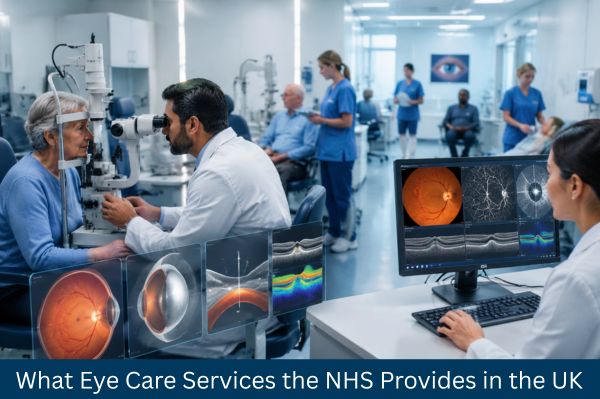
The NHS provides comprehensive ophthalmology services for conditions that are medically necessary to treat. These include:
- Cataract surgery when the cataract significantly impairs vision and quality of life. The NHS performs cataract surgery as a standard procedure, typically implanting a monofocal intraocular lens that corrects distance vision. Patients usually still need reading glasses after NHS cataract surgery.
- Glaucoma diagnosis and management including laser and surgical treatments for raised intraocular pressure.
- Retinal conditions including diabetic retinopathy monitoring and wet macular degeneration injections.
- Corneal disease including corneal transplantation for conditions that significantly threaten vision.
- Emergency and urgent eye care for sudden vision loss, eye injuries, retinal detachments, and acute inflammatory conditions.
- Routine outpatient monitoring for conditions including diabetic eye disease, glaucoma, and ocular hypertension.
The NHS does not typically provide elective vision correction procedures. Laser eye surgery, ICL surgery, refractive lens exchange, and premium lens technology for cataract patients are not funded by the NHS because they are considered elective rather than medically necessary.
What Is Only Available Privately?
- Laser eye surgery (LASIK, Transepithelial PRK, LASEK) for the correction of myopia, hyperopia, and astigmatism
- Implantable Contact Lenses for vision correction in patients who are not suitable for laser
- Refractive Lens Exchange for spectacle independence in patients without significant cataract
- Premium intraocular lenses at the time of cataract surgery, including multifocal, trifocal, extended depth of focus, and toric lenses that reduce or eliminate glasses dependence after cataract removal
- Intense Pulsed Light (IPL) therapy for dry eye and meibomian gland dysfunction
- Corneal Collagen Crosslinking (CXL) is available on the NHS in some regions for keratoconus but waiting times can be lengthy and access varies. It is available promptly at Sussex Eye Laser Clinic privately.
- YAG laser capsulotomy for posterior capsule opacification after cataract surgery is sometimes available on the NHS but waiting times vary significantly by trust.
 Email Us!
NHS Cataract Surgery vs Private Cataract Surgery: What Is the Difference?
This is the area where the NHS versus private distinction most significantly affects patient experience and outcomes.
NHS cataract surgery removes the clouded natural lens and replaces it with a standard monofocal intraocular lens. Monofocal lenses provide good distance vision at a single, fixed focal length. Most patients still need reading glasses after NHS cataract surgery, and those with significant astigmatism may also still need distance glasses.
Private cataract surgery at Sussex Eye Laser Clinic offers the same surgical precision and safety, performed by Prof. Nanavaty with consultant-led care throughout, with additional lens choices:
- Toric monofocal lenses correct pre-existing astigmatism so that fewer patients need distance glasses after surgery.
- Multifocal and trifocal lenses provide good vision at multiple distances, reducing or eliminating the need for reading glasses as well as distance glasses.
- Extended Depth of Focus (EDOF) lenses provide a continuous range of vision with excellent contrast sensitivity, suited to patients who drive at night and want clear distance and intermediate vision.
The premium lens choice is matched to the patient’s lifestyle, visual demands, and optical measurements at a dedicated pre-operative assessment.
Our Other Treatments
Corneal TransplantsWaiting Times: NHS vs Private in Sussex in 2026
NHS waiting times for non-urgent ophthalmology in Sussex, as in many parts of England, have been affected by the sustained pressure on the health service. For patients whose cataract is causing significant visual impairment, NHS surgery is available, but waiting times for initial consultation and then surgery can extend to many months.
At Sussex Eye Laser Clinic, consultations and surgery are typically available within weeks of referral. For patients for whom vision quality is affecting work, driving, or daily independence, private treatment provides a substantially more rapid pathway to treatment.
Does Health Insurance Cover Eye Surgery?
Some UK private health insurance policies cover medically necessary ophthalmic procedures such as cataract surgery, YAG laser capsulotomy, and corneal transplantation. Elective refractive procedures including laser eye surgery, ICL, and RLE are almost universally excluded from health insurance policies as they are not considered medically necessary.
Patients with health insurance should check their policy documentation carefully and contact their insurer before booking to confirm what is covered. Sussex Eye Laser Clinic works with major UK health insurers for covered procedures. The clinic team can advise on what documentation may be required.
Testimonials
“I have seen Mr. Nanavaty Several Times, and he is always very professional and friendly”
Is Private Eye Care Worth the Cost?
For patients considering elective procedures such as laser eye surgery or premium lens surgery, the question is whether the private cost represents good value against the long-term cost of glasses, contact lenses, and their ongoing inconvenience.
A lifetime cost comparison is instructive. The average UK adult spends approximately £150 to £300 per year on contact lenses and solutions alone. Over 30 years, that is £4,500 to £9,000. Adding glasses, frames, and lens changes brings the total considerably higher. A one-time investment in vision correction that eliminates or dramatically reduces this ongoing spend, while also improving daily quality of life, represents strong long-term value for most patients.
 Call Now
Conclusion
The NHS provides excellent medically necessary eye care, but elective vision correction and premium surgical options are only available through private practice. At Sussex Eye Laser Clinic, Prof. Mayank Nanavaty brings NHS consultant-level expertise and the same high standards to private care, with access to the full range of modern procedures. Private treatment here means faster access, consultant-led care throughout, and access to lens and laser technologies that the NHS does not offer. To discuss which treatments are relevant to your situation, contact Sussex Eye Laser Clinic at sussexeyelaserclinic.co.uk.
Our Other Treatments
Advanced Synthetic Corneal TransplantFrequently Asked Questions About Private & NHS Eye Care
Can I get laser eye surgery on the NHS in the UK?
No. Laser eye surgery for myopia, hyperopia, and astigmatism is an elective procedure and is not funded by the NHS in England. It is available exclusively through private providers. Some NHS-employed ophthalmologists, including Prof. Nanavaty, perform private laser eye surgery outside their NHS commitments.
If I need cataract surgery urgently, should I go NHS or private?
If the cataract is significantly affecting your vision and safety, both pathways are valid. The NHS will treat medically significant cataracts, but waiting times can be substantial. Privately, surgery with Prof. Nanavaty at Sussex Eye Laser Clinic can usually be arranged within a few weeks. The additional benefit of private surgery is the option to choose premium intraocular lenses that reduce the need for glasses after surgery.
Does the NHS offer any premium intraocular lenses?
Standard NHS cataract surgery uses a monofocal lens providing good distance vision. Toric lenses to correct astigmatism and multifocal or EDOF lenses to reduce reading glasses dependence are premium options available only through private providers. If you want the best possible visual outcome across multiple distances, private surgery is the appropriate pathway.