
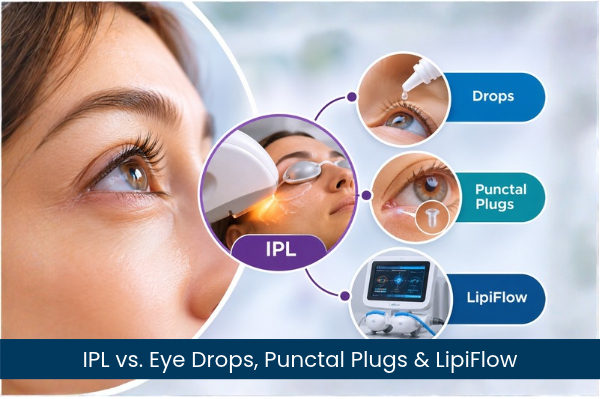
Dry eye can have several underlying causes, and no single treatment suits every patient. This guide looks at how IPL compares with drops, punctal plugs and LipiFlow, so you understand what each option is designed to do before your next appointment.
IPL for Dry Eyes: Introduction
Many patients try lubricating drops for dry eye but continue to experience discomfort. Others may have discussed punctal plugs or heard about dry eye IPL treatment that targets the eyelid glands.
Comparing IPL vs dry eye drops, IPL vs punctal plugs and IPL vs LipiFlow can help patients understand how these approaches differ. The best treatment for dry eyes depends on the factors contributing to the symptoms and the findings of an eye examination. At Sussex Eye Laser Clinic, Prof. MAYANK A. NANAVATY discusses dry eye symptoms, previous treatments and suitable options with patients.
 Drop Us an Email!
Dry Eye Treatment: Why Different Approaches Work in Different Ways
Dry eye is not one single problem. Some people do not produce enough tears, while others produce tears that evaporate too quickly because the oily layer of the tear film is disrupted.
The tear film itself has several layers, and each one protects and lubricates the eye in a slightly different way. A healthy tear film spreads evenly and resists drying out between blinks.
The meibomian glands along the eyelids produce the oil that slows tear evaporation. When these glands become blocked or underactive, a condition called meibomian gland dysfunction, dryness and irritation often follow.
Many patients have more than one contributing factor at once. This is why a treatment aimed at one cause, such as low tear volume, will not necessarily relieve symptoms driven mainly by gland dysfunction.
At Sussex Eye Laser Clinic, an assessment looks at which of these factors is contributing to a patient’s symptoms before any treatment is suggested.
IPL vs Dry Eye Drops, Punctal Plugs and LipiFlow: Quick Comparison
| Treatment | Main Purpose | How It Works | How It Is Delivered | What to Discuss First |
|---|---|---|---|---|
| Dry eye drops | Relieve dryness and support the eye surface | Lubricates or, with prescribed formulations, reduces inflammation | Used at home according to product instructions or the clinician’s advice | Which type suits your symptoms and how often to use it |
| Punctal plugs | Retain natural tears on the eye surface | Small devices inserted into the tear drainage openings | Inserted by a clinician during an appointment | Whether reduced drainage suits your type of dry eye |
| IPL | Support meibomian gland function in selected patients | Controlled pulses of light applied to the skin around the eyes | A course of in clinic sessions, usually spaced a few weeks apart | Whether gland dysfunction is contributing to your symptoms |
| LipiFlow | Treat obstructed meibomian glands | Applies controlled heat and pressure to help express material from the glands | A single in clinic session, sometimes repeated | Whether your glands are suitable for this approach |
IPL vs Dry Eye Drops
Lubricating drops are usually the first line of treatment. They add moisture and support the eye surface, offering relief that typically lasts for a few hours before reapplication is needed.
Some prescribed drops go further, targeting inflammation or specific underlying causes rather than simply adding moisture. The right formulation depends on what is driving your symptoms, which is something your specialist can assess.
IPL, or intense pulsed light for dry eyes, takes a different approach. It is a light based treatment used in selected patients, often where meibomian gland dysfunction plays a role in ongoing dryness.
If drops have not provided enough relief, an eye care specialist at Sussex Eye Laser Clinic can review the type of drops used, how they were used and whether other factors are contributing to symptoms. IPL may be considered for some patients when meibomian gland dysfunction is present.
IPL vs Punctal Plugs
Punctal plugs work on a different principle entirely. They are placed in the small openings where tears normally drain away, helping the eye retain more of its own natural tears.
IPL does not affect tear drainage at all. Instead, it is used in selected patients as part of managing the glands that produce the oily layer of the tear film.
These two considerations, retaining tears versus addressing gland function, are simply different problems. A patient whose main issue is low tear volume may benefit more from plugs, while one with gland related dryness may see more value from IPL.
Plugs are not suitable for everyone. Your specialist can discuss their possible side effects and whether plugs, IPL or a combination may be appropriate.
Our Other Treatments
Laser Refractive Eye SurgeryIPL vs LipiFlow
IPL and LipiFlow are sometimes mentioned together because both are used in patients with meibomian gland dysfunction, but they work quite differently.
IPL uses controlled pulses of light applied to the skin around the eyes, with appropriate eye protection worn throughout the session. It is typically delivered across a short course of appointments.
LipiFlow instead applies controlled heat and pressure directly to the eyelids in a single device assisted session, aiming to clear blocked glands and encourage natural oil flow. The two approaches share a target, the meibomian glands, but reach it through different mechanisms.
Questions worth asking before either treatment include how many sessions are likely to be needed, what the examination findings suggest about your glands, and what a realistic outcome looks like for your particular case. Evidence and individual response can vary, so neither approach guarantees the same result for every patient.
Dry Eye Treatment: What to Consider When Drops or Plugs Have Not Helped
Before discussing further treatment, it helps to prepare some practical information for your appointment, whether at Sussex Eye Laser Clinic or elsewhere.
Think about which symptoms remain, when they are most noticeable, and which products you have tried so far. Note how consistently you used them and whether any caused irritation.
It is also worth noting whether your symptoms change with screen use, weather, or time of day, since this can point towards a particular cause. A short symptom diary kept over a week or two can be useful to share with your specialist.
If you have a punctal plug in place, mention whether it is still there and whether it has caused any discomfort. Let your specialist know if you suspect eyelid inflammation or other issues that have not yet been investigated.
It also helps to ask what benefits and limitations to expect from whatever is suggested next. Do not stop any prescribed treatment or attempt to remove a punctal plug yourself without first speaking to your clinician.
Dry Eye Treatment Experience, Risks and Expectations
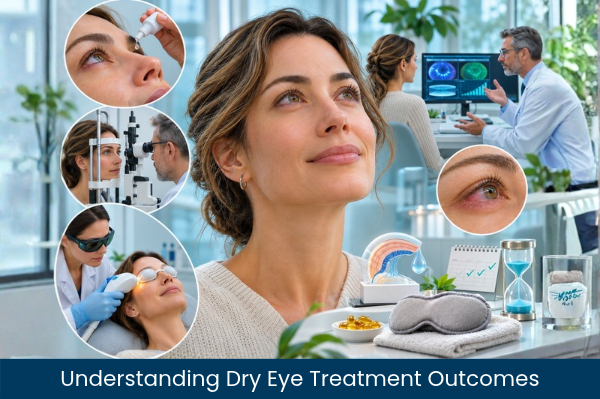
Response times vary across these approaches. Lubricating drops may provide temporary relief, while punctal plugs begin reducing tear drainage once placed, and treatments such as IPL may involve several appointments before their effect can be assessed.
Punctal plugs can cause irritation, watering or displacement, and infection is possible. IPL may cause temporary skin redness or changes in pigmentation, so the clinician should assess suitability and use appropriate eye protection. Ask about the specific risks and precautions for each treatment before proceeding.
Ongoing dry eye care may include further treatment or review, depending on the cause, response and clinician’s advice.
Choosing the Best Treatment for Dry Eyes
Choosing between these options comes down to what an individual assessment shows, rather than picking a preferred treatment in advance.
A thorough review should identify the main contributing factors, consider what you have already tried and how you responded, and weigh up the benefits, limitations and costs of the options available.
Agreeing in advance how progress will be reviewed, and over what timeframe, helps set realistic expectations from the outset. At Sussex Eye Laser Clinic, this review is agreed with you before any treatment begins.
Testimonial
“The experience was excellent. The specialist was very calm, gentle and reassuring, taking the time to listen carefully and explain everything without making me feel rushed. I was given plenty of opportunities to ask questions and clarify any concerns, which made the entire laser eye surgery consultation feel comfortable and reassuring.”
IPL Dry Eye Treatment at Sussex Eye Laser Clinic in Brighton
If drops or plugs have not resolved your symptoms, it may be worth discussing your options with Prof. MAYANK A. NANAVATY at Sussex Eye Laser Clinic. Many patients choose IPL dry eye treatment after other options have not provided lasting relief.
The clinic offers IPL for dry eyes as part of its advanced dry eye management, alongside other treatments such as punctal plugs that can be discussed during a consultation. Please confirm current availability and suitability for your case directly with the clinic, since treatment options are reviewed individually.
If you are looking for dry eye treatment Brighton wide, including IPL for dry eyes Brighton, Sussex Eye Laser Clinic is a dedicated dry eye clinic offering personalised consultations.
Appointments at Sussex Eye Laser Clinic include time to explain each option in plain language, so you leave with a clear sense of what comes next.
Conclusion
Drops, punctal plugs, IPL and LipiFlow each work differently, and ongoing symptoms often call for reviewing the underlying cause rather than abandoning treatment.
A conversation with an eye care specialist can clarify what is driving your symptoms. Contact Sussex Eye Laser Clinic to discuss your options with Prof. MAYANK A. NANAVATY.


