
YAG capsulotomy is a non-invasive laser procedure performed to restore clear vision after cataract surgery or refractive lens exchange. When the posterior capsule – the thin membrane holding the artificial lens in place – becomes cloudy over time, it causes blurred or hazy vision, a condition medically known as posterior capsule opacification (PCO). This cloudiness is not a recurrence of cataracts but rather scar tissue forming on the capsule. The YAG capsulotomy procedure uses a focused beam of laser energy to create a small opening in the clouded capsule, allowing light to pass through clearly again. It is one of the most commonly requested follow-up procedures following lens-based eye surgery in the UK and is considered safe, quick and highly effective.
YAG Eye Surgery: Who Is the Right Candidate?
YAG eye surgery is specifically recommended for patients who have previously undergone cataract surgery or refractive lens exchange and are now experiencing a gradual decline in visual clarity. Common signs that indicate a need for this procedure include blurry or misty vision, difficulty reading or driving in low light, seeing halos around lights and increased glare sensitivity. A thorough ophthalmic examination is carried out before the procedure to confirm whether PCO is the underlying cause. Not every patient will develop this condition – it typically occurs months to years after the initial lens surgery. Age, the type of intraocular lens implanted and individual healing responses can influence its onset.
YAG Laser Capsulotomy: What Happens During the Procedure?
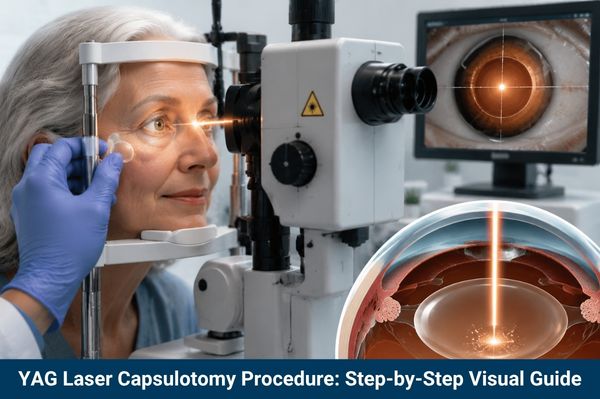
YAG laser capsulotomy is performed as an outpatient procedure, typically taking between 10 to 20 minutes from start to finish. The eye is dilated using prescribed drops before the treatment begins. A special contact lens is placed gently on the eye to help the surgeon focus the laser precisely on the posterior capsule. Short pulses of laser energy are then directed at the clouded membrane, creating a clear central opening. Patients generally feel no pain during the YAG laser capsulotomy treatment, although some report a sensation of light flashes. No incisions or stitches are involved. Most patients can return to normal activities the same day or within 24 hours, though mild floaters or temporary blurring may be noticed immediately after the session.
Read Our Article
YAG Laser Capsulotomy: Risks and Rewards of YAG Eye SurgeryYAG Laser Capsulotomy Treatment: What to Expect Before and After
Before YAG laser capsulotomy treatment, patients are advised to arrange transport home, as dilating drops can temporarily affect vision and driving. A baseline eye pressure check is usually done before the session. After the procedure, anti-inflammatory eye drops are typically prescribed for a short course to reduce any minor swelling or irritation. A follow-up appointment is arranged to check intraocular pressure and confirm that the opening in the capsule is adequate. Most patients notice a significant improvement in vision within a day or two. In rare cases, a secondary treatment may be required if the opening needs to be enlarged. Patients with pre-existing eye conditions such as glaucoma or retinal issues will be assessed more carefully beforehand.
YAG Laser Treatment: How Long Does It Take to See Results?
YAG laser treatment generally produces visible improvement in visual clarity within 24 to 48 hours. For many patients, the change is noticeable almost immediately after the dilating drops wear off. Since the laser opens the clouded capsule in a single sitting, there is no gradual recovery process as with conventional surgery. The improvement in contrast sensitivity, reading ability and overall sharpness is often described as dramatic by patients who had been living with progressively worsening PCO. The results are considered permanent – once the capsule is opened, it does not re-cloud. There is no need for repeat sessions in the vast majority of cases after YAG laser treatment, making it one of the most efficient corrective procedures in post-cataract eye care.
Our Other Treatments
Refractive Lens Exchange SurgeryYAG Laser Capsulotomy Eye Treatment: Possible Risks and Considerations
YAG laser capsulotomy eye treatment carries a low risk profile, but like any medical procedure, it is not entirely without potential complications. A temporary rise in intraocular eye pressure is the most commonly observed effect and is usually managed with eye drops. Some patients may notice an increase in floaters following the procedure, which tends to resolve on its own over weeks. In rare instances, the intraocular lens can become displaced or there is a small risk of retinal detachment – particularly in patients with high myopia or pre-existing retinal vulnerability. Swelling at the back of the eye, known as cystoid macular oedema, is another uncommon but manageable complication. These risks are discussed in full during the pre-procedure consultation to ensure patients can make an informed decision.
YAG Laser Cost: Is It Covered by Health Insurance?
YAG laser cost is often covered, either partially or fully, by private health insurance policies in the UK, provided that the original cataract surgery was also covered under the same plan. It is classed as a medically necessary procedure rather than an elective cosmetic one, which strengthens the case for insurance reimbursement. Patients are advised to contact their insurer directly before booking to confirm the extent of coverage and whether pre-authorisation is required. Some insurance providers may request a referral letter from a GP or optometrist.
Testimonials
“Excellent manner, listens really well and gives multiple opportunities to ask questions, which is really helpful. Very calm, gently spoken and not rushed”
YAG Laser Treatments: Are There Any Alternatives?
YAG laser treatments for posterior capsule opacification remain the gold standard and only established treatment for this condition. There is no medication, eye drop or non-surgical method proven to reverse or dissolve capsule clouding. While preventative approaches – such as choosing specific intraocular lens designs with sharper posterior edges – may reduce the likelihood of PCO developing, they do not eliminate the possibility entirely. Once PCO is confirmed and vision is compromised, the laser procedure is the definitive solution. It is precise, predictable and backed by decades of clinical data.
YAG Laser Surgery: What Questions Should You Ask Your Surgeon?
Before proceeding with YAG laser surgery, patients are encouraged to ask their surgeon about the extent of capsule clouding, the expected outcome based on their specific lens type, any contraindications relevant to their eye health history and the full cost structure including follow-up care. Understanding whether the surgeon performs the procedure personally – rather than delegating to a trainee – is also an important consideration. Asking about the technology being used, the surgeon’s caseload for this procedure and what post-operative monitoring is included will help ensure a fully informed decision.
 Call Now!
About Sussex Eye Laser Clinic
Sussex Eye Laser Clinic, led by Consultant Ophthalmic Surgeon Prof. Mayank A. Nanavaty (MBBS, DO, FRCOphth, PhD), has been delivering specialised eye care from Brighton since 2014. With over 18 years of expertise in lens- and cornea-based surgery, Prof. Nanavaty personally conducts all procedures – including YAG laser capsulotomy. The clinic is recognised for its patient-centred approach, advanced diagnostic technology and outcomes-focused care.
Our Other Treatments
Intense Pulsed Light (IPL) for Dry EyesConclusion
YAG laser capsulotomy is a well-established, minimal invasive procedure that effectively restores visual clarity after posterior capsule opacification – one of the most common late complications of cataract surgery. With a strong safety record, rapid recovery and lasting results, it continues to be the definitive solution for patients experiencing blurred vision following lens-based surgery. Understanding the procedure, costs, risks and candidacy criteria helps patients approach this treatment with confidence and clarity. Consulting an experienced ophthalmic surgeon remains the most important step in determining the right course of action.