
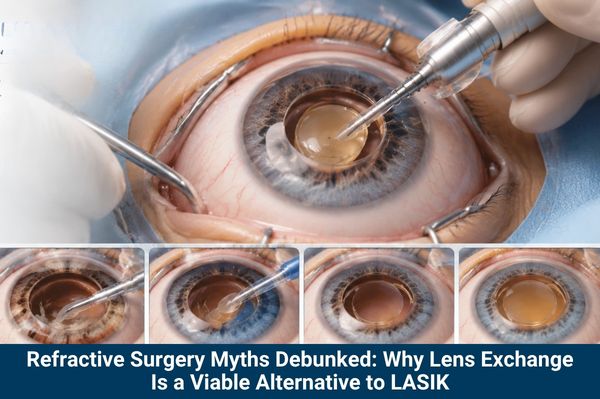
When it comes to vision correction, misinformation spreads fast. Refractive lens exchange surgery is one of the most misunderstood procedures in modern ophthalmology – largely because people confuse it with cataract surgery or consider it too risky or too expensive without ever verifying the facts. This article cuts through the noise and debunks the seven most persistent myths surrounding refractive lens replacement, so you can make an informed decision about your eye health.
Myth 1: Refractive Lens Exchange Surgery is Only for Older Patients
A common misconception is that refractive lens surgery is exclusively reserved for elderly patients or those with cataracts. While it is true that this procedure is especially popular among patients in their 40s and 50s – particularly those experiencing presbyopia – it is not age-restricted by clinical design. Adults who have high prescriptions, thin corneas or dry eye conditions that disqualify them from laser-based refractive surgeries are often ideal candidates for refractive lens replacement at a younger age. The procedure addresses the root cause of refractive error by replacing the eye’s natural lens with a precision-engineered intraocular lens (IOL), making it a relevant option across a much broader age range than most people assume.
Myth 2: Refractive Surgery Means Only LASIK - Lens Exchange Is Not a Real Alternative
Many patients arrive at clinics believing that refractive surgery is synonymous with LASIK or laser-based treatments. This is inaccurate. Refractive surgeries encompass a wide spectrum of procedures, including PRK, implantable contact lenses and refractive lens exchange. For patients with presbyopia, extreme hyperopia or those approaching the natural age of lens hardening, refractive lens exchange is not just an alternative – it is often the clinically superior choice. Unlike laser procedures that reshape the cornea, refractive lens surgery modifies the optical system from within the eye, offering both distance and near vision correction depending on the IOL type selected.
Myth 3: Refractive Lens Exchange Cost Is Unaffordably High
Cost is one of the most frequently cited barriers and yet the assumption that refractive lens exchange cost is out of reach for most patients does not hold up under scrutiny. The cost of refractive lens exchange in the UK typically ranges based on lens technology, the surgeon’s experience and the clinic’s location – but when calculated over a lifetime, it often compares favourably to years of spending on glasses, contact lenses, contact lens solutions and routine optician visits. Additionally, patients who undergo the procedure eliminate its future risk of cataracts, since the artificial IOL cannot develop the clouding that affects natural lenses. When factoring in this long-term value, the true cost of refractive lens exchange becomes considerably more reasonable than the upfront figure suggests.
Myth 4: Refractive Lens Surgery Is Riskier Than Laser Eye Surgery
This myth persists mainly because refractive lens exchange treatment involves an incision inside the eye, which sounds more invasive than a laser procedure. In clinical practice, the risk profile between the two categories of refractive surgeries is comparable and for the right patient, lens exchange may actually carry a lower risk of complications. Laser-based procedures can cause issues like corneal ectasia in thin or irregular corneas, while refractive lens surgery bypasses the cornea entirely. The procedure is performed routinely by experienced ophthalmic surgeons and serious complications are rare when appropriate patient selection and surgical precision are applied. As with any surgical intervention, outcomes depend heavily on the surgeon’s expertise and the thoroughness of the pre-operative assessment.
Our Other Treatments
Laser Refractive Eye SurgeryMyth 5: Refractive Lens Replacement Gives the Same Result as Glasses or Contact Lenses
Some patients question whether refractive lens replacement offers any meaningful advantage over simply wearing corrective lenses. The distinction is significant. Glasses and contact lenses correct vision externally and require daily management, hygiene compliance and ongoing replacement costs. Refractive lens surgery, by contrast, delivers a permanent internal correction. Multifocal and extended depth-of-focus (EDOF) IOLs used in modern lens exchange procedures can correct multiple focal points simultaneously, reducing or eliminating dependence on corrective eyewear entirely. This is not an incremental improvement – for many patients, it represents a complete transformation in daily quality of life, particularly for those who have worn thick-lensed glasses for decades.
Myth 6: Refractive Lens Exchange Surgery Requires a Long Recovery Period
The expectation that lens surgery demands weeks of restricted activity puts off many potential patients. In reality, recovery from refractive lens exchange surgery is generally swift. Most patients notice improved vision within 24 to 48 hours of the procedure, with the eye settling fully over a period of a few weeks. The procedure itself is typically completed in under 30 minutes per eye and patients usually return to light daily activities within a day or two. There are standard post-operative precautions – avoiding swimming, rubbing the eyes or strenuous physical activity for a short period – but the recovery timeline is far less disruptive than most patients anticipate. Bilateral procedures are typically staged a week or two apart to ensure optimal healing.
Testimonials
“Excellent manner, listens really well and gives multiple opportunities to ask questions, which is really helpful. Very calm, gently spoken and not rushed”
Myth 7: All Refractive Surgeries Deliver the Same Visual Outcome Regardless of the Surgeon
Perhaps the most dangerous myth is the assumption that the outcome of refractive lens surgery is standardised and that the choice of surgeon makes little difference. Surgical skill, diagnostic precision, IOL selection and the quality of pre- and post-operative care are all critical variables that directly influence the result. The type of IOL implanted – monofocal, multifocal, toric or EDOF – must be matched carefully to the patient’s lifestyle, visual demands and ocular measurements. An experienced ophthalmic surgeon does not apply a one-size-fits-all approach; they tailor the refractive lens replacement plan based on comprehensive biometric data and individual patient needs. Choosing a highly qualified, specialised surgeon is not a luxury – it is a clinical necessity.
Our Other Treatments
Corneal Collagen Crosslinking (CXL) Eye SurgeryAbout Sussex Eye Laser Clinic
Sussex Eye Laser Clinic, founded in 2014 by Prof. Mayank A. Nanavaty (MBBS, DO, FRCOphth, PhD), is a specialist ophthalmic centre based in Brighton, serving patients across Sussex, Haywards Heath and Sutton. With over 18 years of expertise in lens- and cornea-based refractive surgeries, Prof. Nanavaty personally conducts all procedures, from refractive lens exchange to complex cataract surgery, corneal transplants and laser refractive treatments.
 Call Now!
Conclusion
Separating fact from fiction is the first step toward making the right vision correction decision. Refractive lens exchange surgery is a well-established, clinically proven procedure – not an experimental or overly risky alternative. Whether concerns surround the cost of refractive lens exchange, recovery time or surgical risk, the evidence consistently shows that most myths stem from outdated information or generalisations about refractive surgeries as a whole. Consulting a specialist ophthalmic surgeon for a personalised assessment remains the most reliable way to determine whether refractive lens replacement is the right path for your vision needs.